
4-21-2024
Rights of Citizenship
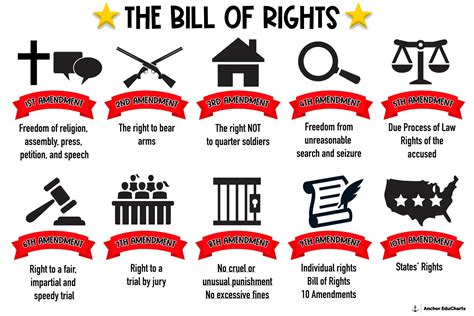
The first 10 amendments called THE BILL OF RIGHTS are guaranteed to Citizens by the Constitution of the United States of America.
CITIZENS
- The First Amendment provides that Congress make no law respecting an establishment of religion or prohibiting its free exercise. It protects freedom of speech, the press, assembly, and the right to petition the Government for a redress of grievances.
- The Second Amendment gives citizens the right to bear arms.
- The Third Amendment prohibits the government from quartering troops in private homes, a major grievance during the American Revolution.
- The Fourth Amendment protects citizens from unreasonable search and seizure. The government may not conduct any searches without a warrant, and such warrants must be issued by a judge and based on probable cause.
- The Fifth Amendment provides that citizens not be subject to criminal prosecution and punishment without due process. Citizens may not be tried on the same set of facts twice, and are protected from self-incrimination (the right to remain silent). The amendment also establishes the power of eminent domain, ensuring that private property is not seized for public use without just compensation.
- The Sixth Amendment assures the right to a speedy trial by a jury of one’s peers, to be informed of the crimes with which they are charged, and to confront the witnesses brought by the government. The amendment also provides the accused the right to compel testimony from witnesses, and to legal representation.
- The Seventh Amendment provides that civil cases also be tried by jury.
- The Eighth Amendment prohibits excessive bail, excessive fines, and cruel and unusual punishments.
- The Ninth Amendment states that the list of rights enumerated in the Constitution is not exhaustive, and that the people retain all rights not enumerated.
- The Tenth Amendment assigns all powers not delegated to the United States, or prohibited to the states, to either the states or to the people.
NON-CITIZENS
Immigrants, foreign visitors and migrants in transit are not afforded the rights of US Citizens.
- No right to unlawfully enter the United States
- No right to break laws of the United States
- No right to break laws of states or territories of the United States
- No right to break city, county or state ordnances
- No right to free housing
- No right to free food
- No right to free education
- No right to free healthcare
- No right to collect unemployment
- No right to collect social security
- No right to collect other “free” benefits
- No rights under the Bill of Rights
Citizens of other countries visiting, residing or working in the United States are expected to obey all laws of the United States and of the states in which they enter.
Neither Congress nor the President has the authority to condone or order the breaking laws of the United States or of any State in the union, nor do they have the power to extend the rights of US Citizens to non-US Citizens. – RTM
 The Real Truckmaster