The Battle of Orange

AO Remember


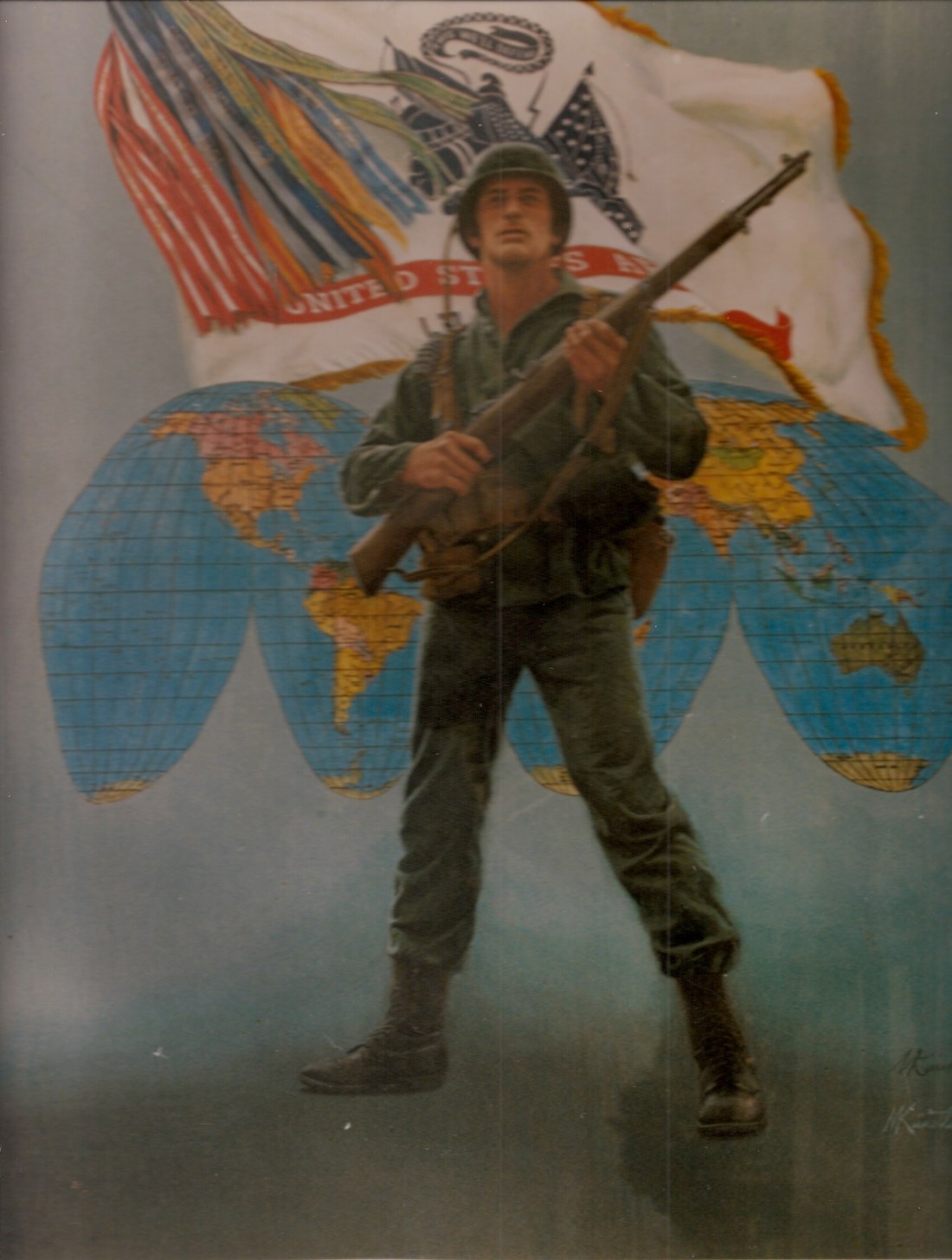
We who have put on the uniform of the United States military were prepared for battle through meticulous training. We were told about the cunning ways of our enemy. We were taught how to fight the enemy not on his terms but ours.


We went to war in foreign lands. Many of our brothers and sisters engaged the enemy on the field of battle with devastating consequences. While the enemy felt our might, many of our brothers and sisters fell in battle. We honor and remember them, like the names on the wall.


We who remain have been fighting the Battle of Orange. It is an enemy we were not told about, nor were we prepared for the affect it has had on our lives over time. Without our knowledge or participation this enemy has whittled away at our body, cell by cell, tearing away at our bodies defenses.


Strangely once exposed to it, the affects are different for each of us. Many of us have yet to realize that we have been affected by it. We attribute our ill health as a process of aging, which might be true, to a certain degree.


We look at other brothers suffering and we feel compassion, but alas it is not I, we think. We go on with life and our brothers and sisters pass away, into eternity and the battle of Orange claims another victim.


What we are learning some 50 plus years later is startling, disheartening and often depressing. We find that the Battle of Orange is from friendly fire. It is self-inflicted by our unsuspecting brothers and sisters utilizing one of the many weapons of war – chemical herbicides.


They are called “Rainbow” herbicides for their many colors – Blue, White, Orange, Pink (just to name a few) each with their own concoction of chemicals, some more deadly than others and effective on plants, animals and humans.


We have heard of their use on foreign soil, used against the enemy to deprive of food and cover. What we have not heard is they were manufactured in chemical plants here on American soil and tested at home and abroad.


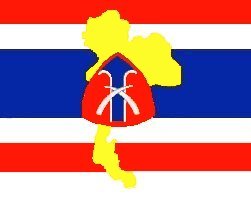
We have learned of their being tested, stored and used at various military installations in the United States, in the Central American country of Panama, where they were tested extensively prior to and during the Southeast Asian war in Vietnam. We find they were used in places like along the DMZ of Korea and in US occupied military bases throughout Thailand and in the countries of Cambodia and Laos.


We were told not to worry because these chemicals were used on the perimeter of bases and did not affect anyone except military police and dog handlers patrolling the fence line. We were told nothing about the potential for “drift” outside the spray zone. We were told nothing about why in a tropical environment there was little to no vegetation growing inside military bases.


It has been more than 50 years since many of us were little more than children, in a land with so much hidden dangers all around us where we spent 12 months or more exposed. The department of Veterans Affairs (VA) has comprised a list of ailments that are VA recognized as a byproduct of exposure to herbicides, and even though we have one or more of these ailments, we must PROVE we were exposed.


Are not the ailments proof enough? Even with our brothers and sisters dying from these ailments, proof is being denied?


What about our families, our children, our grandchildren? We have family members who were exposed? We have children and grandchildren born with a host of uncommon ailments, diseases or worse?


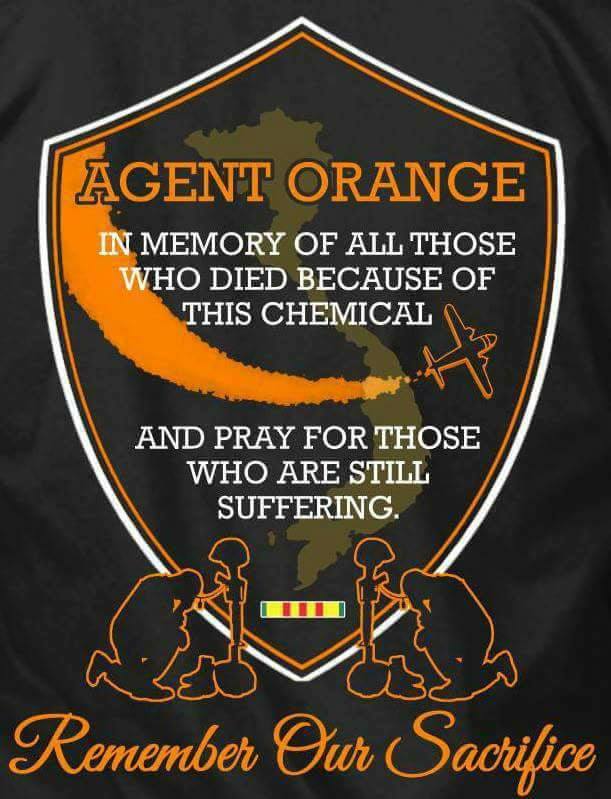
When will our Battle of Orange, (Agent Orange) end?


Death is not the end, the battle continues! – I am the Real Truckmaster!

A Memory from Thailand

thailand usarsupthai test

I’ve told this story a number of times. In late 1968 I was supporting a 33rd Platoon (Refer) convoy hauling refrigerated goods to the 809th Engineer Battalion at Camp Raum Chit Chai outside of Sakon Nakhon, last leg of the 300 mile trip out of Camp Friendship in Korat. I was a SP4 driver with the 569th Transportation Company out of Khon Kaen and filling in for a broke truck, this was my first time pulling a refer trailer.


We made it there without incident, and delivered our refrigerated cargo to places like the mess hall and the Officers and NCO open mess and after fueling up were released in what we called an infiltration convoy (single empty trucks) headed south, back to Camp Khon Kaen, some 170 miles south.


When we drove, it was strip down to t-shirts and stow our helmets and other gear under the passenger seat until we arrived back at the base. The drive from Raum Chit Chai to Sakon Nakhon was over a rather bumpy and dusty road with not much other traffic.


What surprised me were the three vehicles (two trucks with a jeep in the middle) I came upon them were traveling rather slowly (probably at the recommended speed of 37 mph) and I had been a bit faster as I approached from behind. I checked the road ahead and saw no oncoming traffic, so I simply went around those vehicles and continued on my way, until I looked in my rearview mirrors and saw the blinking red light of a Military Police vehicle, and he was coming after me.


I pulled over and jumped out of the vehicle. The MP was rather upset that I had passed him and the other vehicles, even though there was no oncoming traffic. He had me shut down the engine on the M52A2 5-ton tractor and lock it up on the side of the road.


He instructed me to get into the back seat of the M151A2 which had a Thai prisoner headed for the local Thai Police station in Sakon Nakhon. After we dropped him off, I didn’t know what he had done.


As we proceeded back to Raum Chit Chai I was somewhere down in the mullygrubs of self pity. I was taken to the Provost Marshals Office and told to sit on a bench in front of the huge MP desk. I was for a time lost in thought, until I began reading the names on the AWOL board behind the desk. One name in particular (don’t remember the full name), but it was a PFC Wilson who was AWOL from a unit in Vietnam.


I looked down and remembered that I was still wearing my T-Shirt stenciled PFC WILSON, it was a shirt that I didn’t get changed over after being promoted. My fatigue shirt with my SP4 rank was in the cab of the truck, under the seat. I hadn’t even been allowed to grab it. So my immediate thought they’re going to send me to VIETNAM, thinking I’m the AWOL soldier?


They must have realized I wasn’t that guy, so they gave me a DR (Delinquency Report) for speeding and reckless driving which would go to my company commander back at Khon Kaen later that day. I was hand receipted to the convoy commander, who would have someone else drive my truck back, and I had to ride with him.


This was one of the longest rides I’d ever taken. Our battalion policy (as I understood it) was anyone who received a DR for speeding would be automatically busted down a rank (company Article 15) and I knew for a fact that Captain Frank Durazzo was strict and followed the book, which he would promptly throw at me shortly! My squad leader had spoke to me about possibly going to the 519th Transportation Battalion’s NCO academy at Phanom Sarakham sometime in the future, so I guess that was off the table now?


Once we got back to Khon Kaen we lined up for fuel as we entered the motor pool. I told the convoy commander I would wait for him in the orderly room, and proceeded to face my punishment with the company commander.


I was apprehensive and it must have shown on my face, because the first person I ran into was the second platoon leader, my platoon leader 1LT Steven Koons. He asked what happened, and I told him the whole story of screwing up and being hand receipted to the convoy commander, who was to hand me over to the company commander for punishment.


Little did I know that the company commander was away for the monthly commander’s call, and LT Koons was the acting company commander and asked where was the convoy commander and I told him getting fuel. He asked if I’d learned anything from this incident and I told him I learned not to speed.


Shortly the convoy commander came over looking for me. LT Koons tore into him for not maintaining physical control over someone he was never to have let out of his sight. Chewed him out good and told him to get his convoy together and not delay in getting off the base and back to Korat.


After he dismissed this SP5 convoy commander, he turned his attention to me and I knew I was in big trouble. He looked sternly at me and said consider yourself to have been verbally counseled (as he tore up the DR), then dismissed me. Phew!


It turns out that in January 1968 I was promoted to SP5 and never looked back.


Following Thailand ended up making a career out of Army transportation and there were two people who influenced me and shaped my leadership style, one was Staff Sergeant Jerry Nienhouse and the other was LT Steven Koons.


Jerry Neinhouse passed away I believe in 2001, but Steve Koons has been a lifelong example and a good friend over the years.

There are good leaders and there are bad leaders, Colonel you sir are the best of the best and I salute you! – I am the Real Truckmaster


My Story Simplified

FB_IMG_1428536886820


Each Vietnam Veteran has a story to tell about the war as they experienced it. Thailand Veterans of the Vietnam War have our stories to tell. As each Veteran is different, so are their experience as told in their individual stories.

My story began as I arrived in Thailand during the TET of 1968. I was an 18 year old Kuna High School graduate from a town near Boise, Idaho.

I had joined the army in September 1968 and just 5 months later, my first time away from home and in a place I had never even heard of before – Thailand. I’ll be honest I thought I was on an island somewhere in the middle of the Pacific ocean. (Somewhat strange thinking since I had been sitting on the tarmac at Saigon’s Tan Son Nhut AB in South Vietnam just a few hours earlier.

As I got off the plane in Bangkok in the middle of the night of 22 February 1968 everything was strange. The smells, the heat, and coupled with the tropical humidity those were the first things I remember about Thailand.

The Thai language is a tonal language, and it makes absolutely no sense to an Idaho farm boy, it wasn’t all Greek to me because I didn’t know Greek either.

After processing in with the army’s Bangkok personnel detachment we spent a day or so before being bused north to Camp Friendship at Korat. I reported in to the 519th Transportation Battalion (Truck) and waited for my orders assigning me to a line haul transportation company. The 519th was under the 9th Logistical Command and had been given the primary mission of delivering all types of military cargo to US Military facilities throughout Thailand.

Camp Friendship was adjacent to the Korat Royal Thai Air Force Base in Nakhon Ratchasima (Korat) about 160 miles north of Bangkok.My stay here was basically an overnight one.

My orders were as a driver with the 569th Transportation Company at a place called Camp Khon Kaen, another 120 miles further north. The following afternoon I was picked up at battalion headquarters and transported in the back of a deuce and a half (the company’s 2 1/2 ton supply truck). After a couple of hours and one rest stop we arrived at the camp.

Being the observant person that I am it didn’t take long to notice that driver sat on the right side of the vehicles and everyone drove on the wrong side of the road. Most of the road signs were in both Thai and English. Distances were in kilometers not miles.


The normal tour for Army troops was 12 months and I didn’t have a clue the amount of change these next 12 months would bring into my life. I was brand new to the Army and fresh out of advanced individual training (AIT) and totally like a fish out of water, way out of my comfort zone.

My motor transport training up to this point had been to drive Army vehicles rated 2 1/2 ton and below (jeeps, pickups, small transport trucks, etc), so it was a real shocker when I was taken into the motor pool of my new unit and shown this humongous looking 5-ton tactical truck-tractor called an M52A2 and mine had a bumper number #229.

Of course it was broken down and sitting on what was called the “deadline” row. I was told that my primary purpose was to find out what was wrong, get it corrected and have the maintenance inspector check it over to insure it was road worthy. Then I would be ready to take it on the road.

Yeah that’s what I was told alright. My primary purpose was to do what I was told by anyone who outranked me, and that was just about everyone I came across. I found myself filling sandbags, building bunkers and digging fox holes; painting rocks; cleaning weapons (M14’s) and pulling company duty as the runner for the charge of quarters (CQ).

Additionally I was issued a military driving permit, assigned to an instructor driver who was charged with teaching me the proper way to operate that 5-ton semi-tractor trailer while moving forward or backward; coupling or uncoupling; and the biggie was getting on the road and driving a left hand steering equipped (US style) vehicle on the left side of the highway, where all you saw was the left side of the road and the back of the vehicle ahead. In order to overtake and pass another vehicle you needed an assistant driver (called a shotgun) to insure the coast was clear.

I soon learned that we would cover all of the area in the Northeastern area of Thailand, to include US Air Force Bases and US Army posts from our base at Camp Khon Kaen which was really self-contained, for the most part. We had a unit dining facility which was a series of 3 insulated, portable units moved side by side and cooled by a series of air conditioners.

The camp had originally occupied a series of Quonset huts and typical wooden buildings for orderly room, supply and an arms room. More recently concrete style, single-story billets were constructed, and the orderly room and supply room were also concrete single-story buildings. The wooden buildings were re-purposed into an NCO club annex, and a PX annex, a barber shop and a work area for the housegirls who cleaned our clothes. Initially we watched movies outside with a sheet stretched out between two poles, and an area with a green lawn was where we reclined to watch movies. Later a concrete building was constructed and we had our day room where we watched movies.

Camp Khon Kaen was rather small, just a couple of acre square, with just enough room for motor pool area with the company maintenance shop and a higher level maintenance shop and a medical aid station, a trailer transfer point, a Thai security guard detachment (security), an MP detachment as well as a Fire Department (engineer) detachment. The camp was located 13 miles north of the town of Khon Kaen and some 60 miles south of Udorn Royal Thai Air Force Base, located in the town of Udon Thani.

The 519th Transportation Battalion maintained trailer transfer points, one at Camp Samae San, one at Camp Friendship and one at Camp Khon Kaen.

The mission was transporting military cargo (general and munitions) in support of the US Air Force’s air campaign over Vietnam, Cambodia and Laos operating from Royal Thai Air Force Bases (Bangkok (Don Maung); Korat; Nakhon Phanom (NKP) or Naked Fanny; Takhli; Ubon; and Udorn).

The 519th also supported US Army’s training missions in Thailand and engineer construction battalion operations out of various installations such as the Sattahip Port Complex (Camp’s Samae San and Vayama); the Korat Storage Facility (Camp Friendship) and nearby Camp Usarthai; Camp Charn Sinthope in Phanom Sarakham; Kanchanaburi; and Sakon Nakhon.

Beginning in late 1969 as the war began to wind down, combat forces began moving out of bases in South Vietnam, and relocating to bases in Thailand, including the US Marines at the Rose Garden in Nam Phong, just a few miles north of Khon Kaen.

Before the end of my 12 month assignment I had the opportunity to extend twice for a total of 18 months, giving me a grand total of 30 months in country.

I spent a total of two years with the 569th Transportation Company hauling cargo out of Khon Kaen and accumulated more than 35,000 accident free miles and obtained the rank of Specialist Five. I met, courted and married a local nation who became my wife in September 1969.

In February 1970 the 569th stood down and personnel were either processed for early release or those with sufficient time remaining were transferred within the battalion to other unit locations in Thailand. I ended up moving south to the 505th Transportation Company at Camp Vayama where I continued delivering cargo throughout bases in Thailand.

During the entire time I spent in Thailand I was never told about how the job we were doing was connected to the war going on in Vietnam. Again maybe I was just a bit naïve, but I never had time to stop and put two and two together, because we operated on a 24/7 round the clock schedule.

After several months I obtained command sponsorship for my marriage and soon received orders to return stateside and process out of the Army.

On 31 July 1970 with my bride in hand, we departed Thailand and arrived at the Oakland Army Terminal in California to be out processed, before returning to my family in Boise, Idaho.

This was a time of political strife across America as the anti-war movement was going strong.

We came home to a different America. Civilians didn’t experience what we had gone thru and even other Veterans, those who were “In Country” Vietnam didn’t consider “In Country” Thailand Veterans as equals.

For many Veterans coming home was quite an adjustment, that some never overcame.

Thailand made an impression on me and I’ve taken many opportunities to go back, visit with friends and see many of the places of my youth.

Many of the “old guard” are gone yet their memory is fresh in my mind and although the country has changed tremendously over the years, there are still many places where they still live as they have for centuries. – The Real Truckmaster



The Real Truckmaster

photos_115

This is your invitation into my world, the world of the “Real Truckmaster”,

In short, I’ve been around the world a time or two and I’ve met some very wonderful, nice people in places you may have only read about, like in the Kingdom of Thailand, Panama Canal Zone, Federal Republic of Germany and the Empire of Japan.

On this blog site I will attempt to share some of the characters and the many experiences I’ve encountered during my days in the United States Army Transportation Corps. I trust you will find my blogs not only entertaining, but informative and educational.

I am – The Real Truckmaster!

We Are Professionals

WE ARE PROFESSIONALS

You and I

We are the experts in our chosen fields

We are senior to few,

Junior to most

And equal to many, but

WE ARE PROFESSIONALS

Our jobs are the toughest, most demanding, yet the most satisfying.

Though our triumphs few, and defeats many over the years,

we have not lost our sense of pride,

WE ARE PROFESSIONALS

The years have demanded our best,

And we have not failed.

The hours are long, the pay is little,

Yet the satisfaction we receive amounts to a great deal more

WE ARE PROFESSIONALS

Written by: Staff Sergeant Joseph J. Wilson, Jr. December 20, 1978

(After completing a 3 year tour in the Panama Canal Zone, while stationed at Fort Carson, CO.)