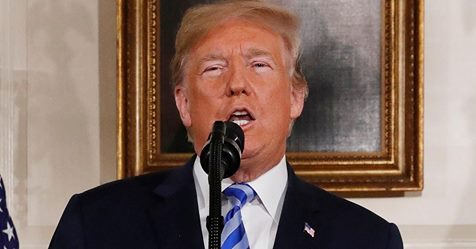
The Unlikely Presidency of Donald J. Trump

trump image

7-12-2018

The Unlikely Presidency of Donald J Trump

What seemed to be a decision based on impulse and staged for a movie production, was in truth a carefully orchestrated event. Donald Trump ascended the staircase in Trump Tower on June 16, 2015 accompanied by his wife Melania and announced on live television he was running for the Republican nomination for President of the United States.

According to Roger Stone’s book, “The Making of the President 2016”, Donald Trump had considered the presidency as far back as in 1986. Trump toyed with the idea in 2000 and again in 2012 but would not commit to running until he was confident it would be a race to be won. Trump is playing chess while everyone else is playing Chinese checkers.

Like many who watched the announcement on television I too had my doubts. I thought it was a publicity stunt designed to capitalize on increasing the ratings for Trump’s show “The Apprentice”. As I watched the names of the seventeen Republican Party presidential hopefuls I had my choices narrowed down to a couple of names and Donald Trump was not one of them.

The Debates

What I expected during the debates was each candidate to sell me on why I should vote to send them to the White House. I have strong opinions on freedom of speech; the right to bear arms; freedom of religion; protecting the United States Constitution; securing our borders; supporting our military and other issues. I wanted to know how they stood on these issues which I considered important to me personally and to the country.

GOP Debates

What stands out for me from the very first GOP debate was how polite and cordial the candidates were toward each other. When asked by the moderator if Donald Trump could stand up against the Democratic Party candidate, Governor Mike Huckabee answered, “On his worst day Trump and every GOP candidate would be better than Hillary Clinton on her best day” (not verbatim), and everyone laughed.

For me the laughing ended when Donald Trump became the first GOP candidate to attack virtually every other GOP candidate, with the exception of Doctor Ben Carson, who at one point asked for “someone to attack me, please”.

When I saw the ferociousness of the attacks by Donald Trump I became personally disgusted at his tactics and was sure that one of my two candidates HAD to be the GOP winner and was I wrong.

There were more GOP debates and while candidates went on the offensive they began dropping out one by one until there was but one left – Donald Trump.

Presidential Candidates Face Off

The debates between Republican candidate Donald J. Trump and Democratic candidate Hillary R. Clinton were a mixed bag. Hillary chided Trump over having no political or foreign policy experience, while she was full of it (political and foreign policy experience). What was tragic was when Hillary was given answers to questions both candidates were to be asked, and Trump was left to answer on the spot and held his ground.

The Campaign Trail

During the 2015 – 2016 campaigns Trump began his “Make America Great Again” speeches calling out “Crooked Hillary” for her deceitful campaigning and media strategy to discredit Trump supporters by calling them “a Basket of Deplorables”.  Soon the “Fly Over Country” grassroots movement began to take hold across middle America which held little importance to the DNC coastal bases in New York and California.

The media attempted to influence public support in favor of Hillary Clinton by downplaying the massive crowd sizes of Trump rallies as compared to the crowd sizes of Clinton rallies which were protested by a defensive Donald Trump and the overflowing crowds of the MAGA crowd showing up hours before stadiums opened.

Election Day

November 9, 2016 was the day of reckoning as American’s headed to the polls to elect a new president well into the night until the last polling place closed. The counting of ballots and reporting of results which led to the forming of Electoral College delegates and super-delegates aligning themselves with the candidate chosen by their respective states.

Election Night

There were celebrations in each campaign headquarters as the results came flowing in way into the early morning hours of November 10, 2016. In the Republican campaign headquarters Team Trump was excited as the numbers became clear and the magic figure of 270 electoral votes became surpassed and exceeded at 300+. In the Democratic campaign headquarters Team Clinton went from celebrating into a deep state of shock and depression. It was unbelievable that in the history of the United States the first woman candidate for the presidency would not be Hillary Clinton. This became the agony of defeat and the realization that America had spoken, loud and clear.

Inauguration #45

On January 20, 2017 Donald J. Trump was sworn in as the 45th President of the United States, replacing Barack H. Obama.

The Resistance Movement

January 20, 2017 would be a day that would go down in infamy as organized and funded public demonstrations and political rioting began “sweeping” America in an attempt to delegitimize a duly elected President and cause widespread discord between the liberal left and the conservative right. Congressional Democrats boycotted the Presidential Inauguration demonstrating their disgust and hatred of the man who “stole” the election from Hillary Clinton. But to quote former President Barack Obama, “Elections have Consequences”.  At the end of the day Donald J. Trump was President.

Russian Collusion

One of the first “scandals” to be unleashed on the American people was the unfounded claim of Russian Collusion between the Trump Campaign and Russia in order to interfere with the U.S. election and influence voters in favor of Donald Trump. This has led to the DOJ to compile a Special Counsel led by Robert Mueller and his infamous 13 angry Democrats. This has been an ongoing investigation that seems to have no boundaries or explicit focus, except as an exploration of a Trump-Russia connection, while excluding an obvious Obama-Hillary-Russia connection of cash and Uranium One and the former Secretary of State Clinton email disaster of 33,000 “lost” emails and unauthorized private internet servers used to transmit highly classified documents. This special counsel investigation has been going on for almost 2 years with no sustainable evidence of wrong doing by the Trump campaign team.

Gun Control

Next a series of school shootings around the country where students targeted and shot other students and teaching staff and in one case a school resource officer (a sheriff’s deputy) stood by until the shooting stopped. Other shootings show school resource officer’s response neutralized the shooter by return fire or placing the shooter in custody. All of this so that organized marches and demonstrations would sway public sentiment toward gun confiscation from lawful gun owners and ultimately stripping away the 2nd Amendment right to bear arms. President Trump suggested a national concealed carry permit be issued that would be valid in all 50 states. His suggestion was met with fierce resistance.

Allegations of Sexual Misconduct

President Trump and others have been steeped in allegations of sexual misconduct going back to the 1980’s in a political stunt leading back to leftist groups paying women to come forward accusing the president  and other political candidates of sexual misconduct. Although it is a federal crime to falsely report a crime, very few of the women or their paid sponsors have been held accountable and virtually all allegations have proven to be false claims.

There have been so called “women’s marches” across the nation’s television broadcast networks and the internet where some of the most vile and hateful women have shown their true ignorance and total hatred of the president, while ridiculing the very women they claim to represent.

Foreign Affairs

President Trump has been cited by the Democratic leftists for having no foreign policy experience, yet seem to forget (or simply not know) that Donald J. Trump Enterprises has conducted what amounts to foreign policy each instance of negotiation of building and properties with foreign governmental leaders. So when the President tweeted a veiled threat to “Rocket Man” of North Korea, it caused an epidemic of hysteria over World War III with the Democratic People’s Republic of Korea. What actually transpired was the first of its kind ever sit down, face-to-face meeting between Supreme Leader Kim Jung Un and President Donald J. Trump culminating in a signed denuclearization agreement of total, verifiable and irreversible denuclearization of the Korean peninsula within the next 2 years. Prior to this meeting the first of its kind meeting between the leaders of North and South Korea at the DMZ, after which it was suggested that President Trump be awarded the Nobel Peace Prize.  The Democrats scoffed and said Trump says he deserves the Nobel Peace Prize.

President Trump has met with international leaders one-on-one in their countries and in international leadership forums, such as the recent NATO Summit where his chastisement over unfair NATO funding by other nations will no longer be tolerated by the United States. The leadership of the president in this matter has brought immediate and renewed pledges of increased support from several other nations.

Border Security and “The Wall”

One of President Trump’s campaign promises was to build the wall along our southern border with Mexico in his “Mexico will pay for it” speeches he reemphasized that for a nation to be sovereign it must have border security and a wall which he has called for Congress to allocate funding so building could commence. What has happened is that the Republican controlled Congress has allowed the Democratic minority to prevent the adequate funding of the wall, yet construction is underway.

DACA

The “dreamers” of President Obama’s executive order Delayed Action for Childhood Arrivals (DACA) was an unconstitutional exercise of executive privilege when it was signed into law in 2012.  Congress did not challenge it at the time and after taking office President Trump gathered congressional leaders together and gave them a challenge to fix DACA, as well as conduct Comprehensive Immigration Reform and he would sign it into law. Nothing happened, except congress attempted to bring a “bill” which they knew did not meet the president’s mandate which was promptly rejected.

The Caravan

Next a caravan of immigrants was traveling from Africa, North, South and Central America all culminating in Mexico near the San Diego border crossing where they were set on unlawful entrance into the United States. They were met on the Mexican side by U.S. attorneys who coached these immigrants on filing for asylum and how to respond to U.S. immigration officials. Soon there was public sentiment built up on the side of these immigrants who crossed over unlawfully and as a consequence became separated from their minor children in the process. The cry went up from Democrats and lawmakers alike on the side of the immigrants berating President Trump and his administration for upholding U.S. immigration laws. The cry rang out to abolish the Immigration and Customs Enforcement (ICE) and for the impeachment of the president for doing exactly what they are supposed to do.

The Flag and National Anthem

It started with Colin Kapernick at an NFL game where he decided to kneel in protest during the National Anthem. When President Trump accused him of being unpatriotic and should be fired for his actions it spurred a wide range of protests and marches across the nation against the president’s remarks citing freedom of speech. Then this movement picked up when American’s began showing their displeasure over the obvious disrespect shown by these NFL protestors. Soon coaching staff, team owners and even the NFL commissioner sided with the protestors, while many Americans simply stopped watching.

Entertainers and Politics

It seems that somehow Hollywood entertainers feel they are smarter than the president, other Americans who support the president and feel the need to publicly declare their hatred of the president and beret anyone who disagrees. There are quite a number of celebrities who have become political experts but don’t remember their pledge to move somewhere else if Trump becomes president. WAKE UP! Elections have consequences and Trump is President.

Why Trump is So Popular with the Right and Hated by the Left

American’s under Obama wanted so much to see Hillary Clinton become the first woman president in the history of our nation. They forgot that Hillary’s chance at the presidency was taken from her by Barack Obama during the election of 2008. As a consolation prize Hillary was given a prestigious cabinet position of Secretary of State which she could have made her mark in the foreign policy arena, but chose instead to dabble in an unsecure and unauthorized use of internet devices and computer servers and even communicated directly with POTUS #44 under a pseudo name.

When President Donald J. Trump was elected his direct and in your face approach to politics as usual in Washington with his “Drain the Swamp” mantra provided a fresh shot of energy to Fly Over Country and Tea Party Americans, but brought out the very worst in the Democratic left.

America Wanted A Leader

America wanted a leader who was a warrior, not a politician. We wanted someone who would cross the Potomac like George Washington, storm the hill like Teddy Roosevelt and meet the enemy head on like George S. Patton. Americans were tired of pansy politicians and what they got was a fighter in Donald J. Trump, a man who knows what he wants, sets out to achieve it and doesn’t let petty politics get in the way. Trump is someone who doesn’t just rock the boat; he turns the boat upside down.

What many Americans don’t know is that governments are established and kings appointed by Almighty God who himself is the King of Kings and Lord of Lord. God set up his plan before the foundation of the world and nothing can upset, startle or change God’s plan, nothing! Throughout biblical times we read of God taking man, placing his anointing upon him and when man is obedient God’s purpose is accomplished. God who put the drive inside Donald J. Trump and it was that drive that brought the Presidency to Trump or vice versa. It was God who gave that first interest in the presidency to Trump so many years ago and it was God who brought it to pass.

Donald Trump is a man who displays Godly wisdom and manly folly at the same time. He is a man who knew of God, but had never truly known God. But like in days of old, God knew Donald Trump, even before the foundation of the world. Each of us has a desire to be loved, to be wanted and a wanting to be used by God. What hinders us is our inability or unwillingness to submit to God and surrender to his will for our life. I’m not saying that Donald Trump is a godly man; he is but a man, who humbled himself before God and said “Here am I Lord!”

As I said in the beginning I was not a fan of Donald J. Trump, in fact I had never sat down to watch “The Apprentice” and didn’t know what Trump Towers was or where it was located, it just never interested me. However during the campaign and since the inauguration I have watched President Donald J. Trump make some outstanding decisions, as well as some things I consider blunders, yet he always seems to pull it off and come out smelling like a rose. So I must consider that as long as Trump is faithful and obedient to God and his purpose and places others before himself, he and America will continue to be blessed in these – Last Days. – I am the Real Truckmaster!

Appointed to the Supreme Court

BrettKavanaugh2_1531179989137_5772430_ver1.0_640_360


7/10/2018

Appointed to the Supreme Court

It is appropriate to discuss President Trump’s latest appointment to the SCOTUS. Everyone has a vested interest in who sits on the Supreme Court. What we all should be able to agree on is that the Supreme Court must be a court of neutrality without bias or prejudice weighing evidence and arguments in accordance to the Constitution of the United States.


I pay no attention to the rhetoric spewed from the left or from the right and it does not matter whether I “like” or “dislike” a particular nominee, nor do I care about his political affiliation.


What I care about is this, is the nominee knowledgeable of U.S. Law and of the U.S. Constitution?

Will he/she make his focus and interpret according to the constitutionality of all arguments made before the SCOTUS?

Will he allow himself/herself to be swayed pro/con when a case comes before the SCOTUS?


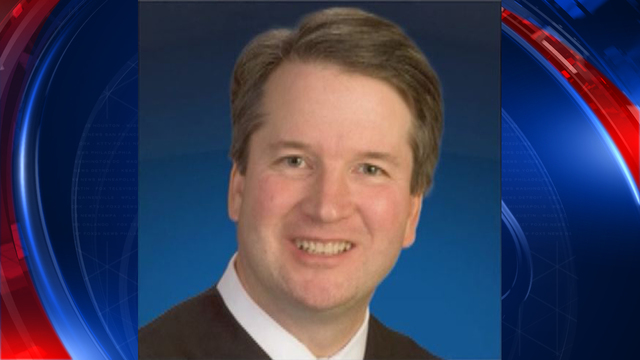
Since we all have our own opinions and our own ideas about whoever the president nominates, we should look at why President Trump selected this particular candidate and what was the “Trump Standard” for this nomination? We must look to what President Trump said about Justice Kavanaugh during his televised press conference:


President Trump nominates Judge Brett Kavanaugh to Supreme Court

http://www.fox5dc.com/news/trump-supreme-court-pick-announcement


“He is a brilliant jurist, with a clear and effective writing style, universally regarded as one of the finest and sharpest legal minds of our time,” Trump said in his prime-time televised White House announcement. He added: “There is no one in America more qualified for this position, and no one more deserving.”


The Judicial Background of U.S. Circuit Judge Brett M. Kavanaugh who currently serves on the Court of Appeals for the D.C. Circuit.


He is a former law clerk for retiring Justice Anthony Kennedy.


Speaking at the White House, Kavanaugh pledged to preserve the Constitution and said that “a judge must be independent and must interpret the law, not make the law. A judge must interpret the Constitution as written.”


A senior White House official said Trump decided on Kavanaugh because of his large body of jurisprudence cited by other courts, describing him as a judge that other judges read.


About the Court

https://www.supremecourt.gov/about/faq_general.aspx


How are Supreme Court Justices selected?


The President nominates someone for a vacancy on the Court and the Senate votes to confirm the nominee, which requires a simple majority. In this way, both the Executive and Legislative Branches of the federal government have a voice in the composition of the Supreme Court.


Are there qualifications to be a Justice? Do you have to be a lawyer or attend law school to be a Supreme Court Justice?


The Constitution does not specify qualifications for Justices such as age, education, profession, or native-born citizenship. A Justice does not have to be a lawyer or a law school graduate, but all Justices have been trained in the law. Many of the 18th and 19th century Justices studied law under a mentor because there were few law schools in the country.


The last Justice to be appointed who did not attend any law school was James F. Byrnes (1941-1942). He did not graduate from high school and taught himself law, passing the bar at the age of 23.


Robert H. Jackson (1941-1954). While Jackson did not attend an undergraduate college, he did study law at Albany Law School in New York. At the time of his graduation, Jackson was only twenty years old and one of the requirements for a law degree was that students must be twenty-one years old. Thus rather than a law degree, Jackson was awarded with a “diploma of graduation.” Twenty-nine years later, Albany Law School belatedly presented Jackson with a law degree noting his original graduating class of 1912.


7 things you might not know about the U.S. Supreme Court

By Elizabeth Nix dated October 08, 2013


This article gives us a glimpse of the tradition and history of the United States Supreme Court.


https://www.history.com/news/7-things-you-might-not-know-about-the-u-s-supreme-court


  1. The court was around for 145 years before it got a permanent home of its own.


The court convened for the first time in February 1790 in New York City, then the nation’s capital. From 1791 to 1800, it assembled in Philadelphia, which served as the capital while Washington, D.C., was under construction. Starting in February 1801, the court began meeting in Washington, where it occupied various sites in the Capitol building for more than a century. (After the British burned the Capitol in 1814, the court even temporarily met in a private home.) In 1929, at the urging of Chief Justice William Taft, Congress authorized some $9.74 million to erect a building the court could call its own. The marble structure, in use since 1935, was designed by architect Cass Gilbert Sr., whose projects included New York City’s Woolworth Building (the world’s tallest skyscraper from 1913 to 1930), along with several state capitols and other public works. Today, the building features its own police force as well as a top-floor gym, with a basketball court nicknamed “the highest court in the land.” Shooting hoops and lifting weights are banned while court is in session, however.


  1. There haven’t always been nine justices on the court.


The U.S. Constitution established the Supreme Court but left it to Congress to decide how many justices should make up the court. The Judiciary Act of 1789 set the number at six: a chief justice and five associate justices. In 1807, Congress increased the number of justices to seven; in 1837, the number was bumped up to nine; and in 1863, it rose to 10. In 1866, Congress passed the Judicial Circuits Act, which shrank the number of justices back down to seven and prevented President Andrew Johnson from appointing anyone new to the court. Three years later, in 1869, Congress raised the number of justices to nine, where it has stood ever since. In 1937, in an effort to create a court more friendly to his New Deal programs, President Franklin Roosevelt attempted to convince Congress to pass legislation that would allow a new justice to be added to the court—for a total of up to 15 members—for every justice over 70 who opted not to retire. Congress didn’t go for FDR’s plan.


  1. There are no official qualifications for becoming a Supreme Court justice.


The Constitution spells out age, citizenship and residency requirements for becoming president of the United States or a member of Congress but mentions no rules for joining the nation’s highest court. To date, six justices have been foreign born; the most recent, Felix Frankfurter, who served on the court from 1939 to 1962, was a native of Vienna, Austria. The youngest associate justice ever appointed was Joseph Story, who was 32 years old when he joined the bench in 1811. Associate Justice Oliver Wendell Holmes Jr., who served from 1902 to 1932, retired at age 90, making him the oldest person ever to sit on the court. One thing every justice who’s served shares in common is that all were lawyers prior to joining the court. During the 18th and 19th centuries, before attending law school was standard practice, many future justices got their legal training by studying under a mentor. James Byrnes, who served on the court from 1941 to 1942, was the last justice who didn’t attend law school (Byrnes, who also didn’t graduate from high school, worked as a law clerk and later passed the bar exam.) Harvard has produced more members of the court than any other law school; to date, 20 justices have attended or graduated from the venerable institution, which was established in 1817 and is America’s oldest continually operating law school.


  1. Justices are appointed for life but can be impeached.


Associate Justice William O. Douglas put in 36 years and 7 months on the bench, from April 1939 to November 1975, the longest tenure of any justice in the court’s history. Douglas’ successor, John Paul Stevens, was part of the court from December 1975 to June 2010, making him the third-longest serving justice. (Steven Johnson Field, who served from 1863 to 1897, comes in second.) Although they are appointed for life, more than 50 have chosen to retire or resign; that number has included the likes of John Jay, Oliver Wendell Holmes, Jr., Charles Evan Hughes, Earl Warren, Thurgood Marshall, and, more recently, William Rehnquist and Sandra Day O’Connor. Only one justice ever has been impeached: Samuel Chase, in 1804. The U.S. House of Representatives voted to impeach Chase, an outspoken figure accused of acting in a partisan way during various court proceedings; however, the U.S. Senate acquitted him in 1805 and he remained on the bench, where he had served since 1796, until his death in 1811.


  1. William Howard Taft is the only person to have served as U.S. president and on the court.


Taft served as America’s 27th president, from 1909 to 1913, during which time he appointed five associate justices and one chief justice. After losing his bid for re-election, Taft, a graduate of Yale University and Cincinnati Law School, and a judge for the U.S. Court of Appeals prior to his presidency, went on to teach law at Yale and serve as head of the American Bar Association, among other activities. In 1921, following the death of Chief Justice Edward Douglass White, whom Taft had appointed when he was in the White House, President Warren Harding nominated Taft as White’s replacement. As the court’s 10th chief justice, Taft successfully advocated for passage of the Judiciary Act of 1925, which enabled the justices to choose which cases they wanted to hear (today, the court follows the so-called rule of four, by which at least four justices must vote to grant a petition to review a case before it can be heard by the court). Taft served as chief justice until February 1930, when he resigned due to poor health; he died the following month.


  1. George Washington appointed the most justices to the court.


The president of the United States has the sole power to nominate Supreme Court justices whenever there are openings on the court, and each nomination must be confirmed by the U.S. Senate. George Washington made 11 appointments to the court, while Franklin Roosevelt made the second highest number of appointments, nine. Only three presidents besides Andrew Johnson did not make appointments: William Henry Harrison (who died in 1841, a month after his inauguration), Zachary Taylor (who passed away in 1850, 16 months after taking office) and Jimmy Carter. To date, presidents have submitted 160 nominations, including nominations for chief justice. Of that total, 124 were confirmed, with seven of them opting not to take the job. America’s 10th president, John Tyler, who assumed office after the death of William Henry Harrison, made nine nominations while in office from 1841 to 1845, but the politically unpopular Tyler managed to get just one of those nominations confirmed by the Senate.


  1. In recent years, the court has received some 10,000 annual requests to review cases, but hears only about 80.


The justices usually only take on cases involving significant legal principles or cases in which lower courts have disagreed about the interpretation of federal laws. Most of the court’s cases come to it on appeal from lower federal courts and state courts; however, the Supreme Court has original jurisdiction (the right to hear a case for the first time, before any appellate review) in a few instances, such as cases involving ambassadors or disputes between two or more states. Because the justices primarily hear cases on appeal, it’s uncommon for witnesses or evidence to be presented in court. Instead, attorneys submit written legal arguments (briefs) in advance and justices typically listen to oral arguments, in which each side has 30 minutes to make a presentation, during which the justices can ask questions. (The courtroom is open to the public during oral arguments, which are not allowed to be televised or photographed; since 1955, the court has made audio recordings of oral arguments, which are released after the arguments are over.) The justices later meet in private to discuss and vote on each case. In the event of a tie vote, the decision of the lower court is upheld.


I suggest that whether you are liberal or conservative take the time to become educated on the matter you are about to cover, particularly on social media. There is enough undocumented and unsubstantiated misinformation floating around that put the term “fake news” to shame.

The day and time we live is history in the making and we are each part of it. Don’t be swayed by the right or the left, but educate yourself so you can make a more informed decision on matters that concern Americans and the United States of America. – I am the Real Truckmaster!


Realtruckmaster.blog

History Repeating Itself – Federalists vs Republicans

Constitution

7-10-2018

History Repeats Itself – Federalists vs Republicans

It’s ironic that on this day in 1798 the country was so divided politically that a Senate-backed bill, signed by an unpopular President John Adams made it a crime for anyone deemed a threat or publishing “false, scandalous, or malicious writing” against the government of the United States. It was called The Sedition Act of 1798 and was signed into law on July 10, 1798 and lasted until it expired on March 3, 1801.

Were such a law in effect today the prisons would be vastly overcrowded and many of us would in fact be using pen and paper (if we could get it) to pen our memoirs which we would not be allowed to send anywhere or to anyone from our cells.

I thought with all the political hype pitting man against man today it would be good to take a look back at how it all began, then relook at where we are today. You’re welcome to come along or you can go directly to the study.com website link below and maybe enroll yourself in an online course of American History.

Hamilton vs. Jefferson

This lesson really shows us the origins of the two-party political system. It all begins with Alexander Hamilton at the lead of the Federalists and Thomas Jefferson leading the Democratic-Republicans – from here out, we’ll say ‘Republicans’ for short.

The Federalists

Hamilton’s group was made up of merchants, bankers and manufacturers, with some wealthy farmers and Southern plantation owners. They were mostly well-educated and owned property. Most of them were in New England and along the coast.

The Republicans

Jefferson’s cohorts were mostly artisans, shopkeepers, frontier settlers, backcountry farmers and poor farmers. They were mostly ill-educated and illiterate. The majority of them were settled in the interior regions. Obviously, Jefferson himself was a plantation owner who was well-educated, but in time you will learn that Jefferson was sort of a paradox.

Can you imagine what it must have been like for President Washington at cabinet meetings? With his Secretary of State, Jefferson, and Hamilton, his Secretary of the Treasury – talk about getting polar advice! Let’s look at the basics of these groups’ beliefs on a few topics: The central government, the direction of the U.S. economy, the French Revolution, the national bank and paying the war debt from the revolution.

Positions on the Issues

Central Government

Hamilton favored a strong central government – a large republic that would control factions. He considered ‘common people’ to be ignorant and incapable of self-government. He believed that the elite should rule, so there should be high voting qualifications.

Jefferson favored states’ rights. He believed democratic principles were right. He believed the ‘common man’ is capable of self-government, and he believed in lowering voting qualifications.

Direction of the U.S. Economy

Hamilton and the Federalists stressed manufacturing, commerce, finance and overseas trade. They wanted tariffs and business protections.

Jefferson and the Republicans wanted a simple agrarian economy (that basically means a farming economy). They favored the yeoman farmer – that means the small farmers of the South, not the big plantation owners. They wanted the government to support the interests of the ‘common man.’

Hamilton favored a strong central government, while Jefferson favored the rights of the states.

Although President Washington warned against the nation falling into political factions, the different views of the Constitution held by Alexander Hamilton and the Federalists and Thomas Jefferson and the Democratic-Republicans set the path for the two-party system that the U.S. has today.

https://study.com/academy/lesson/hamilton-and-the-federalists-vs-jefferson-and-the-republicans.html

As you can see from the brief history lesson, not much has changed politically since then as we still have those who think that the government is the answer and seek to ensure total dependency of the people by a Democratic Party government. It is up to the government to provide free stuff (health insurance, medical treatment, education, food stamps, housing, cell phones and more). Democrats are modern day Federalists.

We still have those who think the common man, the working man is able to think and provide for themselves and their families. They are the backbone of the country and feel that the government should not become involved in the business of everyday life and nothing is ever free and must be earned by men and women of the republic. Thus the modern day Republican Party is the party of a representative government for the working man where everyone should become involved in helping each other achieve the American Dream. Republicans are for the most part Constitutionalists and see themselves as standing up to defend the Constitution and Liberty.

Let us take a closer look at that one piece of legislation from 1798:

The Sedition Act of 1798

July 10, 1798

In one of the first tests of freedom of speech, the House passed the Sedition Act, permitting the deportation, fine, or imprisonment of anyone deemed a threat or publishing “false, scandalous, or malicious writing” against the government of the United States. The 5th Congress (1797–1799), narrowly divided between the majority Federalists and minority Jeffersonian Republicans, voted 44 to 41 in favor of the Senate-passed bill. Federalists championed the legislation fearing impending war with France and out of the desire to hold the majority in Congress and to retain the White House, then occupied by Federalist John Adams. In an era when newspapers served as political parties’ chief organs, the Republican press was particularly vicious in its attacks on Federalists and the Adams administration. “Liberty of the press and of opinion is calculated to destroy all confidence between man and man,” noted one of the bill’s supporters, John Allen of Connecticut. “It leads to the dissolution of every bond of union.” Republicans defended the First Amendment protecting free speech and press. “What will be the situation of the people?” James Madison of Virginia demanded. “Not free: because they will be compelled to make their election between competitors whose pretensions they are not permitted by act equally to examine, to discuss and to ascertain.” Signed into law by Adams on July 14, the law proved immensely unpopular with the public and the President lost re-election to Thomas Jefferson in 1800. Under the incoming Republican administration, the Sedition Act eventually expired on March 3, 1801; however, arguments made for and against it shaped subsequent debate about constitutional protections of free speech.

An unpopular President, John Adams faced increased scrutiny over the signing of the Sedition Act.

The 115th Congress of today seems greatly divided over the issue of freedom of speech as are the American people. With the information age, internet technology, mass media and things like Facebook and Twitter our freedom to speak seems unlimited.

As our mind thinks so we speak (write or tweet). The old Will Rogers saying comes to mind when he said not to argue with an idiot because he will beat you with experience and those watching will soon be unable to tell the difference of who is the idiot (very loosely paraphrased).

So whether you call yourself a Democrat or a Republican or any of the other political off shoots we all should measure our decisions and our responses against what is written in scripture as God alone will judge each person by the very words they have spoken.

So make your choice wisely? – I am the Real Truckmaster!

Realtruckmaster.blog

Birds Squirrels People and Politics

birds squirrels people 36305659_1575402955901949_2212822495847776256_n

7-9-2018

Birds Squirrels People and Politics

While watching birds and squirrels going after the same peanuts I noticed at first they’d go after the biggest one. A few weeks later I noticed that a few squirrels would be putting two peanuts in their mouths and head back to their nest or den or whatever you call their “home”. I noticed that even birds began picking up two peanuts and trying to fly to their nests without dropping any. One day I saw a young squirrel saw bits and pieces of peanuts that had no shells and would seem to like each one up as he spotted it. Animals can be fun to watch and funny in their own way. At our house we have around ten squirrels and quite a number of blackbirds, bluejays, sparrows, robins and finches that come out first for the peanuts, then for the scraps and crumbs. God knows them all by name and takes care of their every need, like he does for people.

However with people they tend to overlook the morsels and fight over scraps and crumbs. Take a happy meal at McDonalds, put it in front of grandchildren and they will fight and bicker over the fries or chicken nuggets but leave the burger until last, if at all. Grownups are not much better. It never ceases to amaze me how many people grab hold of a crumb while ignoring the entire morsel.

There are issues of national and international importance, like global thermonuclear war (remember the movie War Games?); hunger and homelessness in America; Veterans are ignored by the VA over service connected chemical exposure; rioting, demonstrations, mass murder in our streets; children being murdered in abortion clinics and oh so much more going on around us. Internationally we see lawlessness; genocides; sexual trafficking of humans; and wars on every front; religion is under attack and outlawed if not “sanctioned” by regional fanatics.

The information age has besought cybercrime and cyber criminals are hacking into secure financial computer systems and attempting to hack top secret military computer networks and identity theft affects a great many people in so many ways. All too often when cyber hackers are caught are they prosecuted and put away for life? No, many are given six figure incomes with some of the very corporations they have hacked into, so they can stop future hacking attempts.

Meanwhile back in American politics the democrats are still looking for Donald Trump’s tax returns, Hillary is still wondering “What Happened” and republicans are stuck on Benghazi. Sounds about right don’t it?

Around 242 years ago the Constitution of the United States was written utilizing biblical principles and would be eventually adopted by all of the original 13 states to become the Rule of Law in America, making it a Constitutional Republic, the only one of its kind in the world, even today. It consists of Amendments and the Bill of Rights and defines how our government is one of the people, by the people and for the people. It contains provisions for self-government, a system of checks and balances in government, even establishes protocol for lawful entry and punishment for unlawful entry.

We are at a point in time where lawmakers and lawbreakers have joined forces in an attempt to shred the Rule of Law, discredit and smear people and their ideas should they be different. We have gone through a period of more than 20 years where the government has become the know all, fix all for national and international affairs and there are many in government who have a firm grasp on political power and have become financially secure at the expense of the American taxpayer.

Some would tend to boil America down into two pots of politically red and politically blue, which totally ignores the intent of our founding fathers who created a melting pot of people from all nations and cultures leaving their homelands and coming to America to become part of the American Dream. They are not “dreamers” as our liberal politicians and media would have us to believe. One must become more than just a dreamer because dreamers are not doers. Just as wanting to be rich and have all the benefits does not make you a skilled worker without doing a lot of hard work.

I don’t believe that red and blue define us today anymore that blue and gray defined us more than 150 years ago under President Abraham Lincoln. Ideology and patriotism doesn’t define us either because it comes down to action or inaction. Either you are in action moving forward working to achieve your American Dream, or you are simply caught up in inaction, unable to achieve anything of significance.

So while America is moving forward to once again become once again a major dominant force in world affairs, there is a need for ALL Americans to unite under one flag, the Stars and Stripes, and support one leader and whether you love him or hate him that leader is President Donald J. Trump.

Let me give you some alternatives. 1) – Move outside the USA, where you are free to express yourself, but not without consequences. 2) – Support and engage in subversive activities and insurrection against the U.S. government, with consequences. 3) – Sit back and do nothing! The consequences will take care of themselves and you right along with them.

It has been said many times that “a man who stands for nothing will fall for anything”! – I am the Real Truckmaster!

Realtruckmaster.blog

Choosing to Divide

breaking news

7-7-2018

Choosing to Divide

Since when does the Constitution give anyone the right to divide? Name an Amendment? Give me precedence or something that clearly states, “You have the God-given right to divide the United States of America for political purposes?” Our country is not the Divided States of America, at least not constitutionally. As a nation we have more in common than we have differences. Yet it is the differences which divide us and anyone who does not feel, act or say as we think becomes the enemy, right? Wrong!

Over the past 242 years our nation has had the peaceful change of 45 administrations and with each new president we have quarreled over what person is best suited to hold the highest office of the land, with one exception – General George Washington! He is the only one to receive ALL the votes and become our first President of the United States. I’ll let you in on a little known secret (none have been perfect) ok?

Our forefathers came to the new world to start over, raise their families and expand their own horizons. They did not come for war, but in peace. They did not want to infringe upon anyone else’s right to live freely. Men and women came seeking new adventures. They did not bring slaves.

I’ve written on slavery before and America does not have a slavery problem, unless you count the slavery imposed by a government who gives away free stuff in exchange for total dependency and domination.

Slavery has been around for quite some time and it will never truly go away until the demand stops. What is ludicrous is when a small group of Americans try to extort a government or a people by using guilt to achieve ill-gotten financial gain or to exercise a certain power over other people, even of their own race or heritage.

Shortly after the election of Barack Obama I had a young black man ask me who is the best and who was the worst president?  Now this tends to be a loaded question and the expected answer may not always please the one asking. Without hesitating I told him that every president falls into both categories. He didn’t understand, so I explained that new presidents tend to be looked at as the best president and the outgoing president is seen as the worst, depending on who’s asking and who’s answering.

Wartime presidents are looked at as good presidents when we are winning, but bad presidents because of the loss of American lives or the destruction waged upon the enemy. Scandals occurring during their administration tend to pull every president down.

When America is attacked the president must respond with appropriate and decisive action and constitutionally the congress must declare war. As we have seen often a president who wages war is seen as a tyrant and without the backing of congress AND the American people it can go badly real fast.

This brings me back to the real question, by what authority does one choose to divide the nation up for political purposes? In the case of elected and appointed government officials AND members of the U.S. military services we must CHOOSE to take the oath of office where we pledge with our sacred honor to protect and defend the Constitution of the United States against ALL ENEMIES both foreign and domestic and there is no expiration date on that oath. So it baffles the mind and makes me a bit angry when I see or hear of people taking the oath but not honoring it. Take for example our president, our legislative and judicial officials, even those appointed into public service. For the most part our oaths are the same.

During the Obama administration it was rumored that newly “minted” citizens did not have to pledge their allegiance to the flag, or the nation when reciting the oath of citizenship. I don’t know if that was true, but just hearing about it was disturbing.

So when it was heard that the Trump administration was requiring West Wing staff and Cabinet officials to pledge or give their allegiance to the president the media led congress went berserk, over what – nothing! Yet those who groaned the loudest did the same thing before they assumed office and I’m sure they required their staff to be loyal to them and back their efforts.

America under President Trump is charting a new course in world affairs and it scares those who want America to be that safe little place on this side of the world, but with no restrictions of any kind, EXCEPT when it comes to the president’s agenda or what he says or does.

Rather than backing this president and telling the world we are of one body, our public officials go out of their way to insure that they are on record as opposing anything this president does. By doing this they undermine national security and US foreign policy as defined by the president. The media amplifies this opposition and broadcasts to the world that America is divided, sending a clear signal to our friends and enemies alike that we are ripe for the picking.

It is important that the nation project to the world that we stand with our president and have our nation’s back because peace through strength is the deterrent that defines us as a strong alley and a profound adversary.

When campaigning on the stump Abraham Lincoln repeated a biblical verse that a house divided cannot stand. He understood that principle even though he was self-educated during a time when public education meant walking miles to sit in a one room classroom, unless you were the bread winner for the family. Abraham Lincoln stayed true to his convictions that a united America was essential and that we had more in common than we had in division. He staked his life on it.

Choosing to divide is certainly an option which many entertain just because they can. Choosing to unite is a better option. Contrary to what the media and various entertainers tell us, America is stronger when we stand together. I stand behind President Trump and will do my part to resist the resisters in order to Make America Strong Again, to Make America Safe Again, and to Make America Great Again.

Will you? – I am the Real Truckmaster!

Realtruckmaster.blog

Waving Goodbye to the Blue Wave

7-7-2018

Waving Goodbye to the Blue Wave

Nine years after Barack Obama #44 assumed the presidency Americans have awakened to the reality of the effect of bad politics which have assaulted the American way of life and torn away the very fabric of the Constitution. Nothing has been better at uncovered the level of conditioning of Americans than the election of Donald Trump #45 which resulted in overt attempts to subvert his presidency.

Leading the charge and openly calling for stalking and harassment of members of the current administration is lifetime politician Maxine Waters (D-CA) who is one to call out the president over issues which she and her democratic colleagues in the Congress refuse to address legislatively.

Another vocal opponent of the president is another lifetime congresswoman Nancy Pelosi (D-CA) who point fingers at the President’s administration for refusing to allow unlawful entry to aliens into our nation. Pelosi’s own district in Northern California has become a lawless slum of homelessness, filth and garbage which has overtaken the sanctuary city of San Francisco and others. She too refuses to compile or promote legislation to address the lawlessness in the city or the immigration issues which plague the nation.

Let us not forget our Senatorial resisters such as Chuck Schumer (D-NY) who is another lifetime politician who would rather openly oppose the president over language, than to conduct legislation that would address immigration law or fund border wall construction simply because he has power over Senate Democrats and a number of RINO’s who cower along with the crowd.

Even Senator Diane Feinstein (D-CA) who is a lifetime politician would rather become a road bump for President Trump than a pillar of hope in restoring America as a safe place to live and raise families. As California has turned the corner politically becoming a tyranny and an oppressive state that treats its citizens as taxable cash cows, while piling on the free range and open grazing for unlawful immigrants, she has not voiced her concern for even the people who voted for her time after time.

I won’t go into detail over congressional RINO’s like John McCain (R-AZ) and others who would rather go out in flames as one who stood in the way of American safety and security because their feelings were hurt by the president.

Each example above have claimed to be God fearing men and women who love America and are standing up to President Trump as voices for the American people, yet in reality nothing could be further from the truth. It would appear that the god they fear is the god of power and they just won’t let go. American voters sent each of them to Washington D.C. to govern our nation and ensure that our people are safe from harm. What we see are simply politicians who have seemingly unlimited power over America because they have made politics a lifetime commitment.

With each passing day and each ridiculous and outrageous statement of “fictional news” stories America can see that new political ideas are needed in order for America to survive. World events are constantly changing and America must be proactive in order to stay ahead of those changes. Politicians do not want change, especially when it requires them to give up power over people.

The Democratic Party of yesteryear is no longer viable, but has been replaced by a socialistic-communistic-fascistic agenda which enables the government to control every facet of life. The blue wave has turned into a goodbye wave as the party is doing unto the people before they realize what’s been done.

This enables a differing approach to politics by a new breed of American voters who are passionate about restoring American values that allow the nation and its people to prosper. Our nation was founded by visionaries who committed themselves to an idea so new and so radical that their very lives depended upon it. This new idea is called Liberty. Nathan Hale’s “Give me liberty or give me death!” cries out even today. – I am the Real Truckmaster!

Realtruckmaster.blog

America’s Space Force

7-6-2018

America’s Space Force

Once again the pundits have quickly miscalculated President Donald J. Trump when he announced he was directing the Department of Defense to explore how to create another branch of the military – the Space Force.

How quickly people forget that back in 2015 a real estate developer announced he was running for the presidency? Didn’t that evoke the same silly responses? Well how well did that work out for you?

I must admit I had a chuckle or two as I thought about the Jetson’s cartoon and all the Star Wars movies. Yes it caused me a bit of silliness and then I realized that it must have been seen the same way when airplanes began being used in World War I and World War II by the U.S. Army as a means of waging war on the enemy. It wasn’t long before Congress created the U.S. Air Force using assets of the Army Air Corps in the early 1950s. I could hear it now, “The president wants to create an Air Force, now isn’t that cute?” “What are they going to do zoom around in the sky and make the enemy afraid? Ha! Ha! Ha!”

And what about NASA? Lots of laughs over that too!

So you see it’s not as far-fetched as you might think. In fact there are differing schools of thought about a Space Corps, which Congress tried unsuccessfully to pass in 2000. Yet we have the Space Command of the USAF in action in satellite monitoring and control technology with the nucleus coming from all branches of the DOD. It’s currently headquartered at Peterson AFB in Colorado.

Oh but you knew that already, of course you did?

Did you also know that the U.S. Army has a Space Force already? Career Field FA40. This is a small force of space operators and enablers, building a Space Cadre of soldiers who understand how to work in space and integrate it into land operations.

In 2000 the Rumsfeld Space Commission report prompted the Army to start looking at expanding its space force over fears of a “space Pearl Harbor”. The Army Space Personnel Development Office has had a concerted effort to grow the cadre which began in 1999 with 23 members to over several hundred today that make up less than 1 percent of the Army’s total active force. The Army even has a Space Training and Integration branch and has deployed “The Kestrel” a small low-cost imaging satellite to the International Space Station recently. The U.S. military services rely on space and will continue to need personnel who are trained to use space in support of national security.

Read more in this article by Caroline Houck – August 23, 2017 on the Defense One website – https://www.defenseone.com/technology/2017/08/armys-space-force-has-doubled-six-years-and-demand-still-going/140467/

Just remember this – Donald J. Trump doesn’t start something he’s not determined to accomplish. So all of you naysayers just keep it up and very soon you may be eating crow and saying “Beam Me Up, Scottie”! – I am the Real Truckmaster!

Realtruckmaster.blog


Beyond Unhinged

7-3-2018

Beyond Unhinged

The antics of the liberal left know no bounds. What a man thinks in his heart, so he is. Recently I wrote a blog on how Trump became president and the reason I came to that conclusion. Our society has been actively ousting God from every endeavor and facet of life in America. We have removed him from our schools, our public square and even our hearts. We have relegated God to the sidelines only to be noticed when the chips are down. Then we blow our whistle we expect God to come running. You know something God has a great sense of humor and tolerates mankind way more than I can. I personally don’t tolerate stupid people very well.

Even though we chose to live a godless life without bounds, we are never satisfied. The same is true in politics we want a godless president, one who is not influenced by biblical standards. A president who makes up feel good, but allows us to do as we please. The same standard we place on God.

America is like a ship, a “ship of state” and while navigating through the waters of a troubled world it often needs a course correction. Many times we don’t want correction we want freedom to continue living as we wish, even though the end goal is destruction.

Because God is our creator he knows what lies ahead for us and our country. His course correction often comes as catastrophic events which man calls “An Act of God” which God has tolerated from us. Other events are possibly changes in presidential administrations through tragedy or the normal election process of American politics. In America history has recorded wars, earthquakes and hurricanes, floods and fires, yet God is still in control and knows what lies ahead in the future of the nation.

Over the years course correction has come through civil unrest, assignations and wars of aggression and worldwide calamity. With each event it took a special kind of person at America’s helm. World War II & Korea were Presidents Roosevelt and Truman; Vietnam were Presidents Johnson through Ford; Iraq and Afghanistan Presidents G.H.W. Bush then Clinton; 9/11 and War on Terror it was President G.W. Bush; next came the policy decisions of Obama and the consequences of unchecked mass immigration leading to organized civil rebellion and disobedience.

The plans of God are perfect and his timing is righteous, but alas that time was not yet so God did not call forth any known politician because politics had become business as usual and America needed a coarse correction. American politics received a knockout punch when a political unknown answered God’s call to arms and Donald Trump became president. God chose a man familiar with coarse corrections in his personal life and in the business world, which would be invaluable on the political and world stage.

God did not choose a man without scars and baggage, but a man of courage, determination and persistence who would not back down when things got tough. Many a politician would have folded and went back home at the first sign of pressure.

As God placed G.W. Bush at the helm for 9/11, so God placed D.J. Trump at the helm for the rising political unrest and God has a plan for good and not evil this “shining city on a hill “- America.

Do you not see? God has a plan and everything happens for a reason and for the glory of Almighty God. The world as we knew forever changed on 9/11/2001 as America lost her innocence when the Twin Towers fell and evil called out.

The unthinkable happened on 11/2/2016 and the world stood still as Donald J. Trump stood to become President. A man so steeped in his persona that there seemed to be no room for anyone else, yet God had a different plan for America.

Those who knew Trump knew that he was not presidential material. He was rich, conceited and so full of himself that there was no way he would become president, but God’s plan would turn America back to Godly principles, but not without a fight. In the months after the election it has become crystal clear why Donald Trump is the man whom God entrusted with the Presidency.

You can always tell when God is involved because man thinks he knows it all. In fact man thinks he knows more than God about what is good. Remember what I said about God having a great sense of humor? Well BINGO! Where God had given America what they kept asking for, a black president to lead us to the Promised Land yet Obama was simply an overrated pussycat, a real paper tiger.

When Christians prayed for God to deliver America from the forces of evil, God heard and answered our prayers. We wanted a mighty president, a Christian leader someone who would put America back on the right path, yet God in his wisdom gave us Donald Trump (that sense of humor thing). God knew America needed a strong leader someone who would not cave in to pressure but would remain focused and obedient to what God called him to do. God gave us a sword wielding, forward thinking, builder leader to take America (with God’s guidance) from the valley to a new plateau.

As the mantra of this new president “Make America Great Again” evil forces have taken notice. We know this because attacks become more frequent and more urgent as the Trump agenda moves forward there is resistance like never before. What comes out of the mouths of the liberal left and their leadership every day make it perfect timing to abandon the liberal left and the Democrat Party? The left has become totally unhinged as Trump drains the swamp and the alligators are not happy.

America is at a crossroads, do we want safety and security for our families or do we want total anarchy for our nation? The 2020 election will determine the future of America. Until that time we must stay strong and stand for an America that is the light for liberty, justice and the American way. May God Bless President Trump and May God Bless America! – I am the Real Truckmaster!

Realtruckmaster.blog

10 Things You Might Not Know About America’s Independence

Document

7-2-2018

 10 Things You Might Not Know About America’s Independence

How much do you know about early American history? If you were like me going to school in the 50s – 60s history was among the school subjects which I didn’t absorb too well. In fact I consider myself lucky just to make it through in the 12 years required to graduate. Our family moved around and I went to various schools in Southwestern Idaho and Eastern Oregon. After graduating from Kuna High School in Kuna, Idaho with the class of 1967 I probably forgot most of what I was taught particularly American History.

In September 1967 I enlisted in the Army and became a truck driver where I went to Southeast Asia during the Vietnam War. Over the next 22 years I had little opportunity to continue my secondary education, except on a part-time basis. That’s why it only took me 17 years to obtain my 2-year Associates Degree in General Studies. WooHoo!

It wasn’t until I was at the end of my Army career that was able to take courses in American History to complete my Associates Degree requirements. As fate would have it I was in a land far, far away, geographically separated from my family in Colorado that another Idahoan crossed paths with me.

As my mind fails me once in a while and I can’t remember his name (I may have to come back and edit this article to give proper credit to him), I will refer to him as “Professor Fonzie”. He was from Boise, Idaho and was a year older than I and a graduate from Boise High School class of 1966. I remember he said in school his dress was like that of Henry Winkler on Happy Days, leather jacket, slicked back hair and he rode a motorcycle. He was the guy the teachers said would never amount to anything. After graduating (said they really didn’t want to put up with him any longer), he joined the Army and served one enlistment before getting out and using the GI Bill to get his PHD.

He represented the University of Maryland’s Far East campus at Camp Zama, Japan and I was nearby at Yokohama, Japan and commuted to the weekly classes. All I remember about his classes on Early American History, the industrial revolution and up to recent history at the time was that he seldom opened the textbook. He gave out assignments, pop quizzes and lectured in such a way as to bring history alive.

So back to 2018 and the upcoming July 4th celebration, I thought it was be interesting to find out whether what I thought I knew and what I actually didn’t know were one in the same? I came across this article published on Fox News on July 4th, 2011 and there really is a lot of history that I (let’s not say I didn’t know) misremembered as shown in these 10 things you might not know about our independence celebration. – I am the Real Truckmaster!

Realtruckmaster.blog


Published July 4th, 2011 on Fox News

http://www.foxnews.com/us/2011/07/04/10-things-might-not-know-about-our-independence.html

On July Fourth, Americans eat hot dogs and apple pie, watch fireworks, and go swimming.

But what are we really celebrating?

Standard answers to this question are that we are celebrating our independence or the signing of the Declaration of Independence. Well, yes and no.

Here are 10 things you might not know about our America’s Independence Celebration

1.) Independence Was Not Declared on July Fourth: The second Continental Congress actually voted for independence on July 2. In fact, John Adams wrote to his wife, Abigail, predicting that future generations would celebrate July 2 as Independence Day, saying, “The second day of July, 1776, will be celebrated by succeeding generations as the great anniversary festival. It ought to be solemnized with pomp and parade, with shows, games, sports, guns, bells, bonfires, and illumination, from one end of this continent to the other, from this time forward forevermore.” July 4, 1776 is significant because that is the day that Congress officially adopted the Declaration of Independence document, but contrary to what many people believe it was not signed on the July 4. The official signing ceremony occurred on August 2, which is when most of the signers affixed their names to the document, but other representatives signed the document throughout the summer of 1776. Finally, there is no historical record of John Hancock saying that his signature is that big so that King George could read it. It has been suggested that Hancock’s is by far the largest signature simply because he was the president of Congress.

2.) New York Was Late: When the Continental Congress declared independence from Britain the official vote was 12 in favor, 0 against. But wait, you may ask, weren’t there 13 colonies? Where is that last one? The answer: The colony of New York abstained from the original vote on July 2. New York did not decide to join until July 19.

3.) It Was a States Thing First: Independence was not something that was confined to Congress. It started out as a state and local thing. In fact, the very first Declaration of Independence came on Oct. 4, 1774 (21 months before the Continental Congress declared independence) from the town of Worcester, Mass. During the next 21 months a total of 90 state and local declarations of independence would be made. When Virginia declared its independence in May 1776, they sent Rep. Richard Henry Lee to the Continental Congress with specific instructions to put forth a resolution of independence for Congress to vote on, thus allying all the colonies — soon to become states — against the British Empire in the War for Independence.

4.) American Troops Did Not fight Under the American Flag During the Revolution: The Fourth of July is always accompanied by a lot of flag waving, but the soldiers of the American Revolution did not actually fight under the American flag. In fact, our Founders did not really consider the flag to be all that important and the design of the flag varied both in the number of stripes and in the formation of the stars. The reason a uniform flag was adopted was so that our navy ships could be easily identified when arriving in foreign ports, but the boys in the Continental Army did not fight under this flag. In fact, the United States flag was considered so irrelevant that in 1794 when someone introduced a bill in Congress to add two stars to the flag in representation of the entrance of Vermont and Kentucky into the Union many members of the House considered it to be too trivial to pay any attention to. One representative is on record saying that this matter was “a trifling business which ought not to engross the attention of the House, when it was it was their duty to discuss matters of infinitely greater importance.” In the end, the bill was passed simply to be rid of it. The Continental Army did still fight under flags, but these flags were all different depending on the regiment.

5.) Our Founding Fathers Were Not Radicals: As Americans, we like to think that what we did in the American Revolution was original and that our ideas of freedom and rights were new and progressive. But the truth is our Founding Fathers were not radical new thinkers — all of their ideas and philosophies were rooted deeply in history. Ideas of people’s rights, liberty, and social contracts can be traced all the way back through our colonial history, most famously with the Mayflower Compact, and even further through British history and English common law. These ideas can even be seen at work in the medieval era with Magna Carta first established 1215. Our Founding Fathers sought independence in order to preserve their “natural-born rights as Englishmen.”  Though it is true no colony had ever succeeded from the mother country before and the British were quick to call it treason, everything our Founders did was, in fact, legal. Jefferson himself explains that the Declaration was not meant to express anything new. He said it was “not to find out new principles, or new arguments, never before thought of, not merely to say things which had never been said before, but to place before mankind the common sense of the subject.”

6.) We Are Not a Democracy: People often associate democracy with freedom. We hear this word used all the time by our politicians, by our neighbors, even sometimes by our educators. But the fact is we are not a democracy. We are a republic. Our Founding Fathers deemed this an important distinction to make and discussed the matter quite a bit. In the end, our Founding Fathers claimed that a democracy was both extreme and dangerous for a country as it would most assuredly result in the oppression of the minority by the majority. Take this one example from Founding Father, Elbridge Gerry: “The evils we experience flow from the excess of democracy.” And Thomas Jefferson said that democracy should never be practiced outside the limits of a town. Our Founders were very wary of power no matter who had it and thus limited it as much as possible — this is why we have such a unique system of checks and balances.

7.) Jefferson-Hemings Scandal–Not So Scandalous After All? With Independence Day comes a lot of talk about the Declaration of Independence and with that talk comes references to Thomas Jefferson, which these days will inevitably end with the Sally Hemings scandal. The claim that Jefferson fathered children with Hemings started by Jefferson’s political rival Alexander Hamilton as an attempt to smear and discredit him. In the past several years these claims got a lot of media attention when a DNA test was done on the descendants of Sally Hemings, which led people to claim that Thomas Jefferson was definitively the father of her children. However, the matter is far from settled and there are still historians on both sides of the aisle in this debate. The DNA test actually proves that a male from the Jefferson family fathered Sally Hemings’ children –that’s a number of possibilities. At this point, science cannot actually provide us with a definitive answer on the subject.

8.) Our Founding Fathers Would Not Have Recited the Pledge: Another patriotic tradition that gets a lot of attention, particularly around this time of the year, is the Pledge of Allegiance. The Pledge did not exist during our Founders’ lifetimes — something that is very clear when looking at its text. The Pledge was written over a century after America’s founding in 1892. It was also written by a socialist — Francis Bellamy, whose original text was: “I pledge allegiance to my Flag and the Republic for which it stands, one nation, indivisible, with liberty and justice for all.” According to our Founders, the states are not indivisible, but very much the opposite. In fact, when ratifying the U.S. Constitution, some states, such as Virginia among others, specifically declared the right to secede from the Union should they feel it necessary just as an extra precaution to make sure that that state right was understood. Our Founders took their states rights very seriously and considered the U.S. Constitution to be a compact amongst the sovereign states so that any state could secede if it felt the federal government had become oppressive. So, if not with a pledge, how would our Founding Fathers begin meetings and celebrations? The answer: most likely with a prayer. In fact, the very first resolution brought before the First Continental Congress, and immediately passed, was the declaration that they would open every meeting with a prayer.

9.) The Midnight Ride of Paul Revere . . . and 40 others? The mythology of Paul Revere’s midnight ride can be traced back to the year 1860 with the writing of that famous poem, “Paul Revere’s Ride.” Here’s what really happened: On April 18, 1775, British troops were ordered to arrest John Hancock and Samuel Adams, both of whom were in Lexington at the time and to seize arms and provisions at Concord. Upon hearing this, Paul Revere and William Dawes set out on horseback — taking two different routes to Lexington in order to warn Hancock and Adams. Along the way, they warned the towns they passed through of the British invasion. By the morning of April 19 roughly 40 men were out on horseback spreading the news. Revere arrived at Lexington first, followed by Dawes. The two men then headed toward Concord, but were intercepted by British troops. Dawes, though injured, managed to escape, but Revere was captured. He was rescued by American militiamen a short while later. It was during this confrontation between British troops and American militiamen at Concord that the famous shot heard ’round the world was fired.

10.) The British Soldiers of the Boston Massacre Were Defended by John Adams in Court: The Boston Massacre, on March 5, 1770, began with a riot and ended with British troops killing five men. The incident help spark the greater rebellion, which led to the Revolutionary War, but tensions had been rising in Boston since British troops had occupied the city in 1768. But you may be surprised to know that one of the Founding Fathers actually defended the British soldiers that were charged of killing the civilians. John Adams, like many of our Founding Fathers, was a lawyer, and though he was a Patriot, he firmly believed in the right to a fair trial and agreed to represent the British troops in court. Adams succeeded in getting Capt. Thomas Preston acquitted as most others. And the two soldiers who were convicted were spared the death penalty.

So this July Fourth, research what you’re celebrating and talk about it with your family. Benjamin Franklin said that we have Republic, if we can keep it. Former Congressman and author of the book “In Tune with America: our History in Song,” George Nethercutt Jr. put it this way: “The foundation of the freedoms we enjoy as Americans is the U.S. Constitution, the longest surviving constitution of any nation in history. To be civically unaware is to diminish our freedom, but knowing our history makes us all better Americans. Read our nation’s Founding documents and they will inspire you.”


Constitution of the United States

Constitution

Constitution of the United States

www.senate.gov


Introduction


Written in 1787, ratified in 1788, and in operation since 1789, the United States Constitution is the world’s longest surviving written charter of government. Its first three words – “We The People” – affirm that the government of the United States exists to serve its citizens. The supremacy of the people through their elected representatives is recognized in Article I, which creates a Congress consisting of a Senate and a House of Representatives. The positioning of Congress at the beginning of the Constitution affirms its status as the “First Branch” of the federal government.


The Constitution assigned to Congress responsibility for organizing the executive and judicial branches, raising revenue, declaring war, and making all laws necessary for executing these powers. The president is permitted to veto specific legislative acts, but Congress has the authority to override presidential vetoes by two-thirds majorities of both houses. The Constitution also provides that the Senate advise and consent on key executive and judicial appointments and on the approval for ratification of treaties.

For over two centuries the Constitution has remained in force because its framers successfully separated and balanced governmental powers to safeguard the interests of majority rule and minority rights, of liberty and equality, and of the federal and state governments. More a concise statement of national principles than a detailed plan of governmental operation, the Constitution has evolved to meet the changing needs of a modern society profoundly different from the eighteenth-century world in which its creators lived. To date, the Constitution has been amended 27 times, most recently in 1992. The first ten amendments constitute the Bill of Rights.


Annotated Constitutions


The Constitution of the United States of America: Analysis and Interpretation (popularly known as the Constitution Annotated) contains legal analysis and interpretation of the United States Constitution, based primarily on Supreme Court case law.


The Constitution of the United States of America, S.PUB.103-21 (1994) (pdf), prepared by the Office of the Secretary of the Senate with the assistance of Johnny H. Killian of the Library of Congress in 1994, provided the original text of each clause of the Constitution with an accompanying explanation of its meaning and how that meaning changed over time.


Original Text


Preamble


We the People of the United States, in Order to form a more perfect Union, establish Justice, insure domestic Tranquility, provide for the common defense, promote the general Welfare, and secure the Blessings of Liberty to ourselves and our Posterity, do ordain and establish this Constitution for the United States of America.


Article I

Section 1   Section 2   Section 3   Section 4   Section 5   Section 6   Section 7   Section 8   Section 9   Section 10


Section 1


All legislative Powers herein granted shall be vested in a Congress of the United States, which shall consist of a Senate and a House of Representatives.


Section 2


The House of Representatives shall be comprised of Members chosen every second Year by the People of the several State, and the Electors in each state shall have the Qualifications requisite for Electors of the most numerous Branch of the State Legislature.


No Person shall be a Representative who shall not have attained to the Age of twenty five Years, and been seven Years a Citizen of the United States, and who shall not, when elected, be an Inhabitant of that State in which he shall be chosen.


Representatives and direct Taxes shall be apportioned among the several States which may be included within this Union, according to their respective Numbers, which shall be determined by adding to the whole Number of free Persons, including those bound to Service for a Term of Years, and excluding Indians not taxed, three fifths of all other Persons. The actual Enumeration shall be made within three Years after the first Meeting of the Congress of the United States, and within every subsequent Term of ten Years, in such Manner as they shall by Law direct. The Number of Representatives shall not exceed one for every thirty Thousand, but each State shall have at Least one Representative; and until such enumeration shall be made, the State of New Hampshire shall be entitled to chuse three, Massachusetts eight, Rhode-Island and Providence Plantations one, Connecticut five, New-York six, New Jersey four, Pennsylvania eight, Delaware one, Maryland six, Virginia ten, North Carolina five, South Carolina five, and Georgia three.


When vacancies happen in the Representation from any State, the Executive Authority thereof shall issue Writs of Election to fill such Vacancies.


The House of Representatives shall chuse their Speaker and other Officers; and shall have the sole Power of Impeachment.


Section 3


The Senate of the United States shall be composed of two Senators from each State, chosen by the Legislature thereof, for six Years; and each Senator shall have one Vote.


Immediately after they shall be assembled in Consequence of the first Election, they shall be divided as equally as may be into three Classes. The Seats of the Senators of the first Class shall be vacated at the Expiration of the second Year, of the second Class at the Expiration of the fourth Year, and of the third Class at the Expiration of the sixth Year, so that one third may be chosen every second Year; and if Vacancies happen by Resignation, or otherwise, during the Recess of the Legislature of any State, the Executive thereof may make temporary Appointments until the next Meeting of the Legislature, which shall then fill such Vacancies.


No Person shall be a Senator who shall not have attained to the Age of thirty Years, and been nine Years a Citizen of the United States, and who shall not, when elected, be an Inhabitant of that State for which he shall be chosen.


The Vice President of the United States shall be President of the Senate, but shall have no Vote, unless they be equally divided.


The Senate shall chuse their other Officers, and also a President pro tempore, in the Absence of the Vice President, or when he shall exercise the Office of President of the United States.


The Senate shall have the sole Power to try all Impeachments. When sitting for that Purpose, they shall be on Oath or Affirmation. When the President of the United States is tried, the Chief Justice shall preside: And no Person shall be convicted without the Concurrence of two thirds of the Members present.


Judgment in Cases of Impeachment shall not extend further than to removal from Office, and disqualification to hold and enjoy any Office of honor, Trust or Profit under the United States: but the Party convicted shall nevertheless be liable and subject to Indictment, Trial, Judgment and Punishment, according to Law.


Section 4


The Times, Places and Manner of holding Elections for Senators and Representatives, shall be prescribed in each State by the Legislature thereof; but the Congress may at any time by Law make or alter such Regulations, except as to the Places of chusing Senators.


The Congress shall assemble at least once in every Year, and such Meeting shall be on the first Monday in December, unless they shall by Law appoint a different Day.


Section 5


Each House shall be the Judge of the Elections, Returns and Qualifications of its own Members, and a Majority of each shall constitute a Quorum to do Business; but a smaller Number may adjourn from day to day, and may be authorized to compel the Attendance of absent Members, in such Manner, and under such Penalties as each House may provide.


Each House may determine the Rules of its Proceedings, punish its Members for disorderly Behaviour, and, with the Concurrence of two thirds, expel a Member.


Each House shall keep a Journal of its Proceedings, and from time to time publish the same, excepting such Parts as may in their Judgment require Secrecy; and the Yeas and Nays of the Members of either House on any question shall, at the Desire of one fifth of those Present, be entered on the Journal.


Neither House, during the Session of Congress, shall, without the Consent of the other, adjourn for more than three days, nor to any other Place than that in which the two Houses shall be sitting.


Section 6


The Senators and Representatives shall receive a Compensation for their Services, to be ascertained by Law, and paid out of the Treasury of the United States. They shall in all Cases, except Treason, Felony and Breach of the Peace, be privileged from Arrest during their Attendance at the Session of their respective Houses, and in going to and returning from the same; and for any Speech or Debate in either House, they shall not be questioned in any other Place.


No Senator or Representative shall, during the Time for which he was elected, be appointed to any civil Office under the Authority of the United States, which shall have been created, or the Emoluments whereof shall have been encreased during such time; and no Person holding any Office under the United States, shall be a Member of either House during his Continuance in Office.


Section 7


All Bills for raising Revenue shall originate in the House of Representatives; but the Senate may propose or concur with Amendments as on other Bills.


Every Bill which shall have passed the House of Representatives and the Senate, shall, before it become a Law, be presented to the President of the United States: If he approve he shall sign it, but if not he shall return it, with his Objections to that House in which it shall have originated, who shall enter the Objections at large on their Journal, and proceed to reconsider it.  If after such Reconsideration two thirds of that House shall agree to pass the Bill, it shall be sent, together with the Objections, to the other House, by which it shall likewise be reconsidered, and if approved by two thirds of that House, it shall become a Law. But in all such Cases the Votes of both Houses shall be determined by Yeas and Nays, and the Names of the Persons voting for and against the Bill shall be entered on the Journal of each House respectively. If any Bill shall not be returned by the President within ten Days (Sundays excepted) after it shall have been presented to him, the Same shall be a Law, in like Manner as if he had signed it, unless the Congress by their Adjournment prevent its Return, in which Case it shall not be a Law.


Every Order, Resolution, or Vote to which the Concurrence of the Senate and House of Representatives may be necessary (except on a question of Adjournment) shall be presented to the President of the United States; and before the Same shall take Effect, shall be approved by him, or being disapproved by him, shall be repassed by two thirds of the Senate and House of Representatives, according to the Rules and Limitations prescribed in the Case of a Bill.


Section 8


The Congress shall have Power To lay and collect Taxes, Duties, Imposts and Excises, to pay the Debts and provide for the common Defence and general Welfare of the United States; but all Duties, Imposts and Excises shall be uniform throughout the United States;


To borrow Money on the credit of the United States;


To regulate Commerce with foreign Nations, and among the several States, and with the Indian Tribes;


To establish an uniform Rule of Naturalization, and uniform Laws on the subject of Bankruptcies throughout the United States;


To coin Money, regulate the Value thereof, and of foreign Coin, and fix the Standard of Weights and Measures;


To provide for the Punishment of counterfeiting the Securities and current Coin of the United States;


To establish Post Offices and post Roads;


To promote the Progress of Science and useful Arts, by securing for limited Times to Authors and Inventors the exclusive Right to their respective Writings and Discoveries;


To constitute Tribunals inferior to the supreme Court;


To define and punish Piracies and Felonies committed on the high Seas, and Offences against the Law of Nations;


To declare War, grant Letters of Marque and Reprisal, and make Rules concerning Captures on Land and Water;


To raise and support Armies, but no Appropriation of Money to that Use shall be for a longer Term than two Years;


To provide and maintain a Navy;


To make Rules for the Government and Regulation of the land and naval Forces;


To provide for calling forth the Militia to execute the Laws of the Union, suppress Insurrections and repel Invasions;


To provide for organizing, arming, and disciplining, the Militia, and for governing such Part of them as may be employed in the Service of the United States, reserving to the States respectively, the Appointment of the Officers, and the Authority of training the Militia according to the discipline prescribed by Congress;


To exercise exclusive Legislation in all Cases whatsoever, over such District (not exceeding ten Miles square) as may, by Cession of particular States, and the Acceptance of Congress, become the Seat of the Government of the United States, and to exercise like Authority over all Places purchased by the Consent of the Legislature of the State in which the Same shall be, for the Erection of Forts, Magazines, Arsenals, dock-Yards, and other needful Buildings;—And


To make all Laws which shall be necessary and proper for carrying into Execution the foregoing Powers, and all other Powers vested by this Constitution in the Government of the United States, or in any Department or Officer thereof.


Section 9


The Migration or Importation of such Persons as any of the States now existing shall think proper to admit, shall not be prohibited by the Congress prior to the Year one thousand eight hundred and eight, but a Tax or duty may be imposed on such Importation, not exceeding ten dollars for each Person.


The Privilege of the Writ of Habeas Corpus shall not be suspended, unless when in Cases of Rebellion or Invasion the public Safety may require it.


No Bill of Attainder or ex post facto Law shall be passed.


No Capitation, or other direct, Tax shall be laid, unless in Proportion to the Census or enumeration herein before directed to be taken.


No Tax or Duty shall be laid on Articles exported from any State.


No Preference shall be given by any Regulation of Commerce or Revenue to the Ports of one State over those of another; nor shall Vessels bound to, or from, one State, be obliged to enter, clear, or pay Duties in another.


No Money shall be drawn from the Treasury, but in Consequence of Appropriations made by Law; and a regular Statement and Account of the Receipts and Expenditures of all public Money shall be published from time to time.


No Title of Nobility shall be granted by the United States: And no Person holding any Office of Profit or Trust under them, shall, without the Consent of the Congress, accept of any present, Emolument, Office, or Title, of any kind whatever, from any King, Prince, or foreign State.


Section 10


No State shall enter into any Treaty, Alliance, or Confederation; grant Letters of Marque and Reprisal; coin Money; emit Bills of Credit; make any Thing but gold and silver Coin a Tender in Payment of Debts; pass any Bill of Attainder, ex post facto Law, or Law impairing the Obligation of Contracts, or grant any Title of Nobility.


No State shall, without the Consent of the Congress, lay any Imposts or Duties on Imports or Exports, except what may be absolutely necessary for executing its inspection Laws: and the net Produce of all Duties and Imposts, laid by any State on Imports or Exports, shall be for the Use of the Treasury of the United States; and all such Laws shall be subject to the Revision and Control of the Congress.


No State shall, without the Consent of Congress, lay any Duty of Tonnage, keep Troops, or Ships of War in time of Peace, enter into any Agreement or Compact with another State, or with a foreign Power, or engage in War, unless actually invaded, or in such imminent Danger as will not admit of delay.


Article II


Section 1


The executive Power shall be vested in a President of the United States of America. He shall hold his Office during the Term of four Years, and, together with the Vice President, chosen for the same Term, be elected, as follows:


Each State shall appoint, in such Manner as the Legislature thereof may direct, a Number of Electors, equal to the whole Number of Senators and Representatives to which the State may be entitled in the Congress: but no Senator or Representative, or Person holding an Office of Trust or Profit under the United States, shall be appointed an Elector.


The Electors shall meet in their respective States, and vote by Ballot for two Persons, of whom one at least shall not be an Inhabitant of the same State with themselves. And they shall make a List of all the Persons voted for, and of the Number of Votes for each; which List they shall sign and certify, and transmit sealed to the Seat of the Government of the United States, directed to the President of the Senate. The President of the Senate shall, in the Presence of the Senate and House of Representatives, open all the Certificates, and the Votes shall then be counted. The Person having the greatest Number of Votes shall be the President, if such Number be a Majority of the whole Number of Electors appointed; and if there be more than one who have such Majority, and have an equal Number of Votes, then the House of Representatives shall immediately chuse by Ballot one of them for President; and if no Person have a Majority, then from the five highest on the List the said House shall in like Manner chuse the President. But in chusing the President, the Votes shall be taken by States, the Representatives from each State having one Vote; a quorum for this Purpose shall consist of a Member or Members from two thirds of the States, and a Majority of all the States shall be necessary to a Choice. In every Case, after the Choice of the President, the Person having the greatest Number of Votes of the Electors shall be the Vice President. But if there should remain two or more who have equal Votes, the Senate shall chuse from them by Ballot the Vice-President.


The Congress may determine the Time of chusing the Electors, and the Day on which they shall give their Votes; which Day shall be the same throughout the United States.


No Person except a natural born Citizen, or a Citizen of the United States, at the time of the Adoption of this Constitution, shall be eligible to the Office of President; neither shall any person be eligible to that Office who shall not have attained to the Age of thirty five Years, and been fourteen Years a Resident within the United States.


In Case of the Removal of the President from Office, or of his Death, Resignation, or Inability to discharge the Powers and Duties of the said Office, the Same shall devolve on the Vice President, and the Congress may by Law provide for the Case of Removal, Death, Resignation or Inability, both of the President and Vice President, declaring what Officer shall then act as President, and such Officer shall act accordingly, until the Disability be removed, or a President shall be elected.


The President shall, at stated Times, receive for his Services, a Compensation, which shall neither be encreased nor diminished during the Period for which he shall have been elected, and he shall not receive within that Period any other Emolument from the United States, or any of them.


Before he enter on the Execution of his Office, he shall take the following Oath or Affirmation:—”I do solemnly swear (or affirm) that I will faithfully execute the Office of President of the United States, and will to the best of my Ability, preserve, protect and defend the Constitution of the United States.”


Section 2


The President shall be Commander in Chief of the Army and Navy of the United States, and of the Militia of the several States, when called into the actual Service of the United States; he may require the Opinion, in writing, of the principal Officer in each of the executive Departments, upon any Subject relating to the Duties of their respective Offices, and he shall have Power to Grant Reprieves and Pardons for Offences against the United States, except in Cases of Impeachment.


He shall have Power, by and with the Advice and Consent of the Senate, to make Treaties, provided two thirds of the Senators present concur; and he shall nominate, and by and with the Advice and Consent of the Senate, shall appoint Ambassadors, other public Ministers and Consuls, Judges of the supreme Court, and all other Officers of the United States, whose Appointments are not herein otherwise provided for, and which shall be established by Law: but the Congress may by Law vest the Appointment of such inferior Officers, as they think proper, in the President alone, in the Courts of Law, or in the Heads of Departments.


The President shall have Power to fill up all Vacancies that may happen during the Recess of the Senate, by granting Commissions which shall expire at the End of their next Session.


Section 3


He shall from time to time give to the Congress Information on the State of the Union, and recommend to their Consideration such Measures as he shall judge necessary and expedient; he may, on extraordinary Occasions, convene both Houses, or either of them, and in Case of Disagreement between them, with Respect to the Time of Adjournment, he may adjourn them to such Time as he shall think proper; he shall receive Ambassadors and other public Ministers; he shall take Care that the Laws be faithfully executed, and shall Commission all the Officers of the United States.


Section 4


The President, Vice President and all Civil Officers of the United States, shall be removed from Office on Impeachment for, and Conviction of, Treason, Bribery, or other high Crimes and Misdemeanors.


Article III


Section 1


The judicial Power of the United States, shall be vested in one supreme Court, and in such inferior Courts as the Congress may from time to time ordain and establish. The Judges, both of the supreme and inferior Courts, shall hold their Offices during good Behaviour, and shall, at stated Times, receive for their Services, a Compensation, which shall not be diminished during their Continuance in Office.


Section 2


The judicial Power shall extend to all Cases, in Law and Equity, arising under this Constitution, the Laws of the United States, and Treaties made, or which shall be made, under their Authority;—to all Cases affecting Ambassadors, other public ministers and Consuls;—to all Cases of admiralty and maritime Jurisdiction;—to Controversies to which the United States shall be a Party;—to Controversies between two or more States;—between a State and Citizens of another State;—between Citizens of different States;—between Citizens of the same State claiming Lands under Grants of different States, and between a State, or the Citizens thereof, and foreign States, Citizens or Subjects.


In all Cases affecting Ambassadors, other public Ministers and Consuls, and those in which a State shall be Party, the supreme Court shall have original Jurisdiction. In all the other Cases before mentioned, the supreme Court shall have appellate Jurisdiction, both as to Law and Fact, with such Exceptions, and under such Regulations as the Congress shall make.


The Trial of all Crimes, except in Cases of Impeachment, shall be by Jury; and such Trial shall be held in the State where the said Crimes shall have been committed; but when not committed within any State, the Trial shall be at such Place or Places as the Congress may by Law have directed.


Section 3


Treason against the United States, shall consist only in levying War against them, or in adhering to their Enemies, giving them Aid and Comfort. No Person shall be convicted of Treason unless on the Testimony of two Witnesses to the same overt Act, or on Confession in open Court.


The Congress shall have Power to declare the Punishment of Treason, but no Attainder of Treason shall work Corruption of Blood, or Forfeiture except during the Life of the Person attainted.


Article IV


Section 1


Full Faith and Credit shall be given in each State to the public Acts, Records, and judicial Proceedings of every other State. And the Congress may by general Laws prescribe the Manner in which such Acts, Records and Proceedings shall be proved, and the Effect thereof.


Section 2


The Citizens of each State shall be entitled to all Privileges and Immunities of Citizens in the several States.


A Person charged in any State with Treason, Felony, or other Crime, who shall flee from Justice, and be found in another State, shall on Demand of the executive Authority of the State from which he fled, be delivered up, to be removed to the State having Jurisdiction of the Crime.


No Person held to Service or Labour in one State, under the Laws thereof, escaping into another, shall, in Consequence of any Law or Regulation therein, be discharged from such Service or Labour, but shall be delivered up on Claim of the Party to whom such Service or Labour may be due.


Section 3


New States may be admitted by the Congress into this Union; but no new State shall be formed or erected within the Jurisdiction of any other State; nor any State be formed by the Junction of two or more States, or Parts of States, without the Consent of the Legislatures of the States concerned as well as of the Congress.


The Congress shall have Power to dispose of and make all needful Rules and Regulations respecting the Territory or other Property belonging to the United States; and nothing in this Constitution shall be so construed as to Prejudice any Claims of the United States, or of any particular State.


Section 4


The United States shall guarantee to every State in this Union a Republican Form of Government, and shall protect each of them against Invasion; and on Application of the Legislature, or of the Executive (when the Legislature cannot be convened) against domestic Violence.


Article V   


The Congress, whenever two thirds of both Houses shall deem it necessary, shall propose Amendments to this Constitution, or, on the Application of the Legislatures of two thirds of the several States, shall call a Convention for proposing Amendments, which, in either Case, shall be valid to all Intents and Purposes, as Part of this Constitution, when ratified by the Legislatures of three fourths of the several States, or by Conventions in three fourths thereof, as the one or the other Mode of Ratification may be proposed by the Congress; Provided that no Amendment which may be made prior to the Year One thousand eight hundred and eight shall in any Manner affect the first and fourth Clauses in the Ninth Section of the first Article; and that no State, without its Consent, shall be deprived of its equal Suffrage in the Senate.


Article VI         


All Debts contracted and Engagements entered into, before the Adoption of this Constitution, shall be as valid against the United States under this Constitution, as under the Confederation.


This Constitution, and the Laws of the United States which shall be made in Pursuance thereof; and all Treaties made, or which shall be made, under the Authority of the United States, shall be the supreme Law of the Land; and the Judges in every State shall be bound thereby, any Thing in the Constitution or Laws of any state to the Contrary notwithstanding.


The Senators and Representatives before mentioned, and the Members of the several State Legislatures, and all executive and judicial Officers, both of the United States and of the several States, shall be bound by Oath or Affirmation, to support this Constitution; but no religious Test shall ever be required as a Qualification to any Office or public Trust under the United States.


Article VII  


The Ratification of the Conventions of nine States, shall be sufficient for the Establishment of this Constitution between the States so ratifying the Same.


Done in Convention by the Unanimous Consent of the States present the Seventeenth Day of September in the Year of our Lord one thousand seven hundred and Eighty seven and of the Independence of the United States of America the Twelfth In Witness whereof We have hereunto subscribed our Names,

Go. Washington—Presidt.

And deputy from Virginia

New Hampshire                   John Langdon

Nicholas Gilman

Massachusetts                     Nathaniel Gorham

Rufus King

Connecticut                          Wm. Saml. Johnson

Roger Sherman

New York                               Alexander Hamilton

New Jersey                             Wil: Livingston

David Brearley

Wm. Paterson

Jona. Dayton

Pennsylvania                          B Franklin

Thomas Mifflin

Robt Morris

Geo. Clymer

Thos. FitzSimons

Jared Ingersoll

James Wilson

Gouv Morris

Delaware                                Geo: Read

Gunning Bedford jun

John Dickinson

Richard Bassett

Jaco: Broom

Maryland                                 James McHenry

Dan of St. Thos. Jenifer

Danl Carroll

Virginia                                     John Blair

James Madison Jr.

North Carolina                         Wm. Blount

Richd. Dobbs Spaight

Hu Williamson

South Carolina                         J. Rutledge

Charles Cotesworth Pinckney

Charles Pinckney

Pierce Butler

Georgia                                     William Few

Abr Baldwin

Attest William Jackson Secretary


AMENDMENTS

Amendment I (1791)                 Amendment II (1791)

Amendment III (1791)              Amendment IV (1791)

Amendment V (1791)               Amendment VI (1791)

Amendment VII (1791)             Amendment VIII (1791)

Amendment IX (1791)              Amendment X (1791)

Amendment XI (1795/1798)   Amendment XII (1804)

Amendment XIII (1865)            Amendment XIV (1868)

Amendment XV (1870)             Amendment XVI (1913)

Amendment XVII (1913)           Amendment XVIII (1919)

Amendment XIX (1920)            Amendment XX (1933)

Amendment XXI (1933)            Amendment XXII (1951)

Amendment XXIII (1961)          Amendment XXIV (1964)

Amendment XXV (1967)           Amendment XXVI (1971)

Amendment XXVII (1992)


Amendment I (1791)

Congress shall make no law respecting an establishment of religion, or prohibiting the free exercise thereof; or abridging the freedom of speech, or of the press; or the right of the people peaceably to assemble, and to petition the Government for a redress of grievances.


Amendment II (1791)

A well regulated Militia, being necessary to the security of a free State, the right of the people to keep and bear Arms, shall not be infringed.


Amendment III (1791)

No Soldier shall, in time of peace be quartered in any house, without the consent of the Owner, nor in time of war, but in a manner to be prescribed by law.


Amendment IV (1791)

The right of the people to be secure in their persons, houses, papers, and effects, against unreasonable searches and seizures, shall not be violated, and no Warrants shall issue, but upon probable cause, supported by Oath or affirmation, and particularly describing the place to be searched, and the persons or things to be seized.


Amendment V (1791)

No person shall be held to answer for a capital, or otherwise infamous crime, unless on a presentment or indictment of a Grand Jury, except in cases arising in the land or naval forces, or in the Militia, when in actual service in time of War or public danger; nor shall any person be subject for the same offence to be twice put in jeopardy of life or limb; nor shall be compelled in any criminal case to be a witness against himself, nor be deprived of life, liberty, or property, without due process of law; nor shall private property be taken for public use, without just compensation.


Amendment VI (1791)

In all criminal prosecutions, the accused shall enjoy the right to a speedy and public trial, by an impartial jury of the State and district wherein the crime shall have been committed, which district shall have been previously ascertained by law, and to be informed of the nature and cause of the accusation; to be confronted with the witnesses against him; to have compulsory process for obtaining witnesses in his favor, and to have the Assistance of Counsel for his defence.


Amendment VII (1791)

In Suits at common law, where the value in controversy shall exceed twenty dollars, the right of trial by jury shall be preserved, and no fact tried by a jury, shall be otherwise re-examined in any Court of the United States, than according to the rules of the common law.


Amendment VIII (1791)

Excessive bail shall not be required, nor excessive fines imposed, nor cruel and unusual punishments inflicted.


Amendment IX (1791)

The enumeration in the Constitution, of certain rights, shall not be construed to deny or disparage others retained by the people.


Amendment X (1791)

The powers not delegated to the United States by the Constitution, nor prohibited by it to the States, are reserved to the States respectively, or to the people.


Amendment XI (1795/1798)

The Judicial power of the United States shall not be construed to extend to any suit in law or equity, commenced or prosecuted against one of the United States by Citizens of another State, or by Citizens or Subjects of any Foreign State.


Amendment XII (1804)

The Electors shall meet in their respective states and vote by ballot for President and Vice-President, one of whom, at least, shall not be an inhabitant of the same state with themselves; they shall name in their ballots the person voted for as President, and in distinct ballots the person voted for as Vice-President, and they shall make distinct lists of all persons voted for as President, and of all persons voted for as Vice-President, and of the number of votes for each, which lists they shall sign and certify, and transmit sealed to the seat of the government of the United States, directed to the President of the Senate;—The President of the Senate shall, in the presence of the Senate and House of Representatives, open all the certificates and the votes shall then be counted;—The person having the greatest Number of votes for President, shall be the President, if such number be a majority of the whole number of Electors appointed; and if no person have such majority, then from the persons having the highest numbers not exceeding three on the list of those voted for as President, the House of Representatives shall choose immediately, by ballot, the President. But in choosing the President, the votes shall be taken by states, the representation from each state having one vote; a quorum for this purpose shall consist of a member or members from two-thirds of the states, and a majority of all the states shall be necessary to a choice. And if the House of Representatives shall not choose a President whenever the right of choice shall devolve upon them, before the fourth day of March next following, then the Vice-President shall act as President, as in the case of the death or other constitutional disability of the President—The person having the greatest number of votes as Vice-President, shall be the Vice-President, if such number be a majority of the whole number of Electors appointed, and if no person have a majority, then from the two highest numbers on the list, the Senate shall choose the Vice-President; a quorum for the purpose shall consist of two-thirds of the whole number of Senators, and a majority of the whole number shall be necessary to a choice. But no person constitutionally ineligible to the office of President shall be eligible to that of Vice-President of the United States.


Amendment XIII (1865)

Section 1. Neither slavery nor involuntary servitude, except as a punishment for crime whereof the party shall have been duly convicted, shall exist within the United States, or any place subject to their jurisdiction.

Section 2. Congress shall have power to enforce this article by appropriate legislation.


Amendment XIV (1868)

Section 1. All persons born or naturalized in the United States and subject to the jurisdiction thereof, are citizens of the United States and of the State wherein they reside. No State shall make or enforce any law which shall abridge the privileges or immunities of citizens of the United States; nor shall any State deprive any person of life, liberty, or property, without due process of law; nor deny to any person within its jurisdiction the equal protection of the laws.

Section 2. Representatives shall be apportioned among the several States according to their respective numbers, counting the whole number of persons in each State, excluding Indians not taxed. But when the right to vote at any election for the choice of electors for President and Vice President of the United States, Representatives in Congress, the Executive and Judicial officers of a State, or the members of the Legislature thereof, is denied to any of the male inhabitants of such State, being twenty-one years of age, and citizens of the United States, or in any way abridged, except for participation in rebellion, or other crime, the basis of representation therein shall be reduced in the proportion which the number of such male citizens shall bear to the whole number of male citizens twenty-one years of age in such State.

Section 3. No person shall be a Senator or Representative in Congress, or elector of President and Vice President, or hold any office, civil or military, under the United States, or under any State, who, having previously taken an oath, as a member of Congress, or as an officer of the United States, or as a member of any State legislature, or as an executive or judicial officer of any State, to support the Constitution of the United States, shall have engaged in insurrection or rebellion against the same, or given aid or comfort to the enemies thereof. But Congress may by a vote of two-thirds of each House, remove such disability.

Section 4. The validity of the public debt of the United States, authorized by law, including debts incurred for payment of pensions and bounties for services in suppressing insurrection or rebellion, shall not be questioned. But neither the United States nor any State shall assume or pay any debt or obligation incurred in aid of insurrection or rebellion against the United States, or any claim for the loss or emancipation of any slave; but all such debts, obligations and claims shall be held illegal and void.

Section 5. The Congress shall have power to enforce, by appropriate legislation, the provisions of this article.


Amendment XV (1870)

Section 1. The right of citizens of the United States to vote shall not be denied or abridged by the United States or by any State on account of race, color, or previous condition of servitude.

Section 2. The Congress shall have power to enforce this article by appropriate legislation.


Amendment XVI (1913)

The Congress shall have power to lay and collect taxes on incomes, from whatever source derived, without apportionment among the several States, and without regard to any census or enumeration.


Amendment XVII (1913)

The Senate of the United States shall be composed of two Senators from each State, elected by the people thereof, for six years; and each Senator shall have one vote. The electors in each State shall have the qualifications requisite for electors of the most numerous branch of the State legislatures.

When vacancies happen in the representation of any State in the Senate, the executive authority of such State shall issue writs of election to fill such vacancies: Provided, That the legislature of any State may empower the executive thereof to make temporary appointments until the people fill the vacancies by election as the legislature may direct.

This amendment shall not be so construed as to affect the election or term of any Senator chosen before it becomes valid as part of the Constitution.


Amendment XVIII (1919)

Section 1. After one year from the ratification of this article the manufacture, sale, or transportation of intoxicating liquors within, the importation thereof into, or the exportation thereof from the United States and all territory subject to the jurisdiction thereof for beverage purposes is hereby prohibited.

Section 2. The Congress and the several States shall have concurrent power to enforce this article by appropriate legislation.

Section 3. This article shall be inoperative unless it shall have been ratified as an amendment to the Constitution by the legislatures of the several States, as provided in the Constitution, within seven years from the date of the submission hereof to the States by the Congress.


Amendment XIX (1920)

The right of citizens of the United States to vote shall not be denied or abridged by the United States or by any State on account of sex.

Congress shall have power to enforce this article by appropriate legislation.


Amendment XX (1933)

Section 1. The terms of the President and Vice President shall end at noon on the 20th day of January, and the terms of Senators and Representatives at noon on the 3d day of January, of the years in which such terms would have ended if this article had not been ratified; and the terms of their successors shall then begin.

Section 2. The Congress shall assemble at least once in every year, and such meeting shall begin at noon on the 3d day of January, unless they shall by law appoint a different day.

Section 3. If, at the time fixed for the beginning of the term of the President, the President elect shall have died, the Vice President elect shall become President. If a President shall not have been chosen before the time fixed for the beginning of his term, or if the President elect shall have failed to qualify, then the Vice President elect shall act as President until a President shall have qualified; and the Congress may by law provide for the case wherein neither a President elect nor a Vice President elect shall have qualified, declaring who shall then act as President, or the manner in which one who is to act shall be selected, and such person shall act accordingly until a President or Vice President shall have qualified.

Section 4. The Congress may by law provide for the case of the death of any of the persons from whom the House of Representatives may choose a President whenever the right of choice shall have devolved upon them, and for the case of the death of any of the persons from whom the Senate may choose a Vice President whenever the right of choice shall have devolved upon them.

Section 5. Sections 1 and 2 shall take effect on the 15th day of October following the ratification of this article.

Section 6. This article shall be inoperative unless it shall have been ratified as an amendment to the Constitution by the legislatures of three-fourths of the several States within seven years from the date of its submission.


Amendment XXI (1933)

Section 1. The eighteenth article of amendment to the Constitution of the United States is hereby repealed.

Section 2.  The transportation or importation into any State, Territory, or possession of the United States for delivery or use therein of intoxicating liquors, in violation of the laws thereof, is hereby prohibited.

Section 3.  This article shall be inoperative unless it shall have been ratified as an amendment to the Constitution by conventions in the several States, as provided in the Constitution, within seven years from the date of the submission hereof to the States by the Congress.


Amendment XXII (1951)

Section 1. No person shall be elected to the office of the President more than twice, and no person who has held the office of President, or acted as President, for more than two years of a term to which some other person was elected President shall be elected to the office of the President more than once. But this Article shall not apply to any person holding the office of President, when this Article was proposed by the Congress, and shall not prevent any person who may be holding the office of President, or acting as President, during the term within which this Article becomes operative from holding the office of President or acting as President during the remainder of such term.

Section 2. This article shall be inoperative unless it shall have been ratified as an amendment to the Constitution by the legislatures of three-fourths of the several States within seven years from the date of its submission to the States by the Congress.


Amendment XXIII (1961)

Section 1. The District constituting the seat of Government of the United States shall appoint in such manner as the Congress may direct:

A number of electors of President and Vice President equal to the whole number of Senators and Representatives in Congress to which the District would be entitled if it were a State, but in no event more than the least populous State; they shall be in addition to those appointed by the States, but they shall be considered, for the purposes of the election of President and Vice President, to be electors appointed by a State; and they shall meet in the District and perform such duties as provided by the twelfth article of amendment.

Section 2. The Congress shall have power to enforce this article by appropriate legislation.


Amendment XXIV (1964)

Section 1. The right of citizens of the United States to vote in any primary or other election for President or Vice President for electors for President or Vice President, or for Senator or Representative in Congress, shall not be denied or abridged by the United States or any State by reason of failure to pay any poll tax or other tax.

Section 2. The Congress shall have power to enforce this article by appropriate legislation.


Amendment XXV (1967)

Section 1. In case of the removal of the President from office or of his death or resignation, the Vice President shall become President.

Section 2. Whenever there is a vacancy in the office of the Vice President, the President shall nominate a Vice President who shall take office upon confirmation by a majority vote of both Houses of Congress.

Section 3. Whenever the President transmits to the President pro tempore of the Senate and the Speaker of the House of Representatives his written declaration that he is unable to discharge the powers and duties of his office, and until he transmits to them a written declaration to the contrary, such powers and duties shall be discharged by the Vice President as Acting President.

Section 4. Whenever the Vice President and a majority of either the principal officers of the executive departments or of such other body as Congress may by law provide, transmit to the President pro tempore of the Senate and the Speaker of the House of Representatives their written declaration that the President is unable to discharge the powers and duties of his office, the Vice President shall immediately assume the powers and duties of the office as Acting President.

Thereafter, when the President transmits to the President pro tempore of the Senate and the Speaker of the House of Representatives his written declaration that no inability exists, he shall resume the powers and duties of his office unless the Vice President and a majority of either the principal officers of the executive department or of such other body as Congress may by law provide, transmit within four days to the President pro tempore of the Senate and the Speaker of the House of Representatives their written declaration that the President is unable to discharge the powers and duties of his office. Thereupon Congress shall decide the issue, assembling within forty-eight hours for that purpose if not in session. If the Congress, within twenty-one days after receipt of the latter written declaration, or, if Congress is not in session, within twenty-one days after Congress is required to assemble, determines by two-thirds vote of both Houses that the President is unable to discharge the powers and duties of his office, the Vice President shall continue to discharge the same as Acting President; otherwise, the President shall resume the powers and duties of his office.


Amendment XXVI (1971)

Section 1. The right of citizens of the United States, who are eighteen years of age or older, to vote shall not be denied or abridged by the United States or by any State on account of age.

Section 2. The Congress shall have power to enforce this article by appropriate legislation.


Amendment XXVII (1992)

No law varying the compensation for the services of the Senators and Representatives shall take effect, until an election of Representatives shall have intervened.