Waving Goodbye to the Blue Wave

7-7-2018

Waving Goodbye to the Blue Wave

Nine years after Barack Obama #44 assumed the presidency Americans have awakened to the reality of the effect of bad politics which have assaulted the American way of life and torn away the very fabric of the Constitution. Nothing has been better at uncovered the level of conditioning of Americans than the election of Donald Trump #45 which resulted in overt attempts to subvert his presidency.

Leading the charge and openly calling for stalking and harassment of members of the current administration is lifetime politician Maxine Waters (D-CA) who is one to call out the president over issues which she and her democratic colleagues in the Congress refuse to address legislatively.

Another vocal opponent of the president is another lifetime congresswoman Nancy Pelosi (D-CA) who point fingers at the President’s administration for refusing to allow unlawful entry to aliens into our nation. Pelosi’s own district in Northern California has become a lawless slum of homelessness, filth and garbage which has overtaken the sanctuary city of San Francisco and others. She too refuses to compile or promote legislation to address the lawlessness in the city or the immigration issues which plague the nation.

Let us not forget our Senatorial resisters such as Chuck Schumer (D-NY) who is another lifetime politician who would rather openly oppose the president over language, than to conduct legislation that would address immigration law or fund border wall construction simply because he has power over Senate Democrats and a number of RINO’s who cower along with the crowd.

Even Senator Diane Feinstein (D-CA) who is a lifetime politician would rather become a road bump for President Trump than a pillar of hope in restoring America as a safe place to live and raise families. As California has turned the corner politically becoming a tyranny and an oppressive state that treats its citizens as taxable cash cows, while piling on the free range and open grazing for unlawful immigrants, she has not voiced her concern for even the people who voted for her time after time.

I won’t go into detail over congressional RINO’s like John McCain (R-AZ) and others who would rather go out in flames as one who stood in the way of American safety and security because their feelings were hurt by the president.

Each example above have claimed to be God fearing men and women who love America and are standing up to President Trump as voices for the American people, yet in reality nothing could be further from the truth. It would appear that the god they fear is the god of power and they just won’t let go. American voters sent each of them to Washington D.C. to govern our nation and ensure that our people are safe from harm. What we see are simply politicians who have seemingly unlimited power over America because they have made politics a lifetime commitment.

With each passing day and each ridiculous and outrageous statement of “fictional news” stories America can see that new political ideas are needed in order for America to survive. World events are constantly changing and America must be proactive in order to stay ahead of those changes. Politicians do not want change, especially when it requires them to give up power over people.

The Democratic Party of yesteryear is no longer viable, but has been replaced by a socialistic-communistic-fascistic agenda which enables the government to control every facet of life. The blue wave has turned into a goodbye wave as the party is doing unto the people before they realize what’s been done.

This enables a differing approach to politics by a new breed of American voters who are passionate about restoring American values that allow the nation and its people to prosper. Our nation was founded by visionaries who committed themselves to an idea so new and so radical that their very lives depended upon it. This new idea is called Liberty. Nathan Hale’s “Give me liberty or give me death!” cries out even today. – I am the Real Truckmaster!

Realtruckmaster.blog

America’s Space Force

7-6-2018

America’s Space Force

Once again the pundits have quickly miscalculated President Donald J. Trump when he announced he was directing the Department of Defense to explore how to create another branch of the military – the Space Force.

How quickly people forget that back in 2015 a real estate developer announced he was running for the presidency? Didn’t that evoke the same silly responses? Well how well did that work out for you?

I must admit I had a chuckle or two as I thought about the Jetson’s cartoon and all the Star Wars movies. Yes it caused me a bit of silliness and then I realized that it must have been seen the same way when airplanes began being used in World War I and World War II by the U.S. Army as a means of waging war on the enemy. It wasn’t long before Congress created the U.S. Air Force using assets of the Army Air Corps in the early 1950s. I could hear it now, “The president wants to create an Air Force, now isn’t that cute?” “What are they going to do zoom around in the sky and make the enemy afraid? Ha! Ha! Ha!”

And what about NASA? Lots of laughs over that too!

So you see it’s not as far-fetched as you might think. In fact there are differing schools of thought about a Space Corps, which Congress tried unsuccessfully to pass in 2000. Yet we have the Space Command of the USAF in action in satellite monitoring and control technology with the nucleus coming from all branches of the DOD. It’s currently headquartered at Peterson AFB in Colorado.

Oh but you knew that already, of course you did?

Did you also know that the U.S. Army has a Space Force already? Career Field FA40. This is a small force of space operators and enablers, building a Space Cadre of soldiers who understand how to work in space and integrate it into land operations.

In 2000 the Rumsfeld Space Commission report prompted the Army to start looking at expanding its space force over fears of a “space Pearl Harbor”. The Army Space Personnel Development Office has had a concerted effort to grow the cadre which began in 1999 with 23 members to over several hundred today that make up less than 1 percent of the Army’s total active force. The Army even has a Space Training and Integration branch and has deployed “The Kestrel” a small low-cost imaging satellite to the International Space Station recently. The U.S. military services rely on space and will continue to need personnel who are trained to use space in support of national security.

Read more in this article by Caroline Houck – August 23, 2017 on the Defense One website – https://www.defenseone.com/technology/2017/08/armys-space-force-has-doubled-six-years-and-demand-still-going/140467/

Just remember this – Donald J. Trump doesn’t start something he’s not determined to accomplish. So all of you naysayers just keep it up and very soon you may be eating crow and saying “Beam Me Up, Scottie”! – I am the Real Truckmaster!

Realtruckmaster.blog


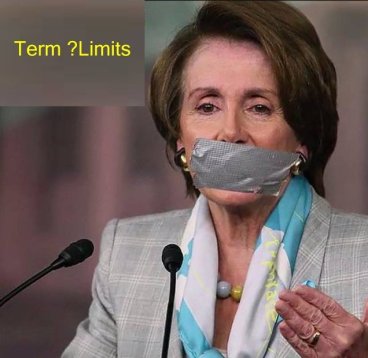
A Case for Congressional Term Limits

Nancy Pelosi

7-6-2018

A Case for Congressional Term Limits

No more American politics as usual is the cry of @FedUpWithPolitics and the @ResignNotRetire when it comes to lifetime politicians. Has anyone looked at their Senators or Representatives? I mean really looked closely at their political background with a microscopic magnifying glass? How many members of the 115th Congress have been in office longer than 2 terms? How many went from State Congress to U.S. Congress? How many switch parties/districts or both in order to continue “serving” the voters of their state? How many climbed the political ladder from a locally elected office to Congress?

We in America have a political dilemma in that young Americans go through law school and straight into politics but never leave. Once they get on the state ballot, they seem to continue until they decide to “retire” from Congress and leave with a pension for life!

Members of Congress have the constitutional authority to create law, yet their apparent taste of political power blinds them to the danger of extended “public service”, which in actuality is really “selfish service” in American politics.

One need only to look around at the loudest “squeaky wheels” in Congress to see that they are often the members with the longest seniority, while others seek to stay quietly beneath the radar, working behind the scenes.

Let’s look at Nancy Patricia D’Alesandro Pelosi (@NancyPelosi) was born in 1940 to a politically active Democratic family. She graduated from the Institute of Notre Dame in Baltimore and from Trinity College in Washington D.D. in 1962 with a B.A. in political science. She interned for Senator Daniel Brewster (D-Maryland). She married in 1963, moved to San Francisco where her brother-in-law was on the City and County of San Francisco’s Board of Supervisors. She worked her way up in Democratic politics and was elected as a member of the Democratic National Committee from California 1976. She was elected as party chair for Northern California in 1977 and for the California Democratic Party which she held from 1981 until 1983. She left her post as DSCC finance chair in 1986. She was picked as the designated successor to U.S. Representative Sala Burton who died of cancer on February 1, 1987, just a month after being sworn in for a second full term. Pelosi won the special election on April 7, 1987 and won the election of June 2, 1987 and took office a week later. She has been reelected 10 more times with 80% of the vote. Nancy Pelosi is a perfect example of a career “life-time” politician and why term limits should be enacted in Congress.

It is my contention that Representatives and Senators who remain in political office become emboldened by the accumulation of political power and become less effective for America due to their own self-importance and feels they are invincible and above the law. This was the same reasoning that the Congress enacted the Twenty-Second Amendment limiting presidents to two terms in office, a total of eight years. – I am the Real Truckmaster!

Realtruckmaster.blog

Beyond Unhinged

7-3-2018

Beyond Unhinged

The antics of the liberal left know no bounds. What a man thinks in his heart, so he is. Recently I wrote a blog on how Trump became president and the reason I came to that conclusion. Our society has been actively ousting God from every endeavor and facet of life in America. We have removed him from our schools, our public square and even our hearts. We have relegated God to the sidelines only to be noticed when the chips are down. Then we blow our whistle we expect God to come running. You know something God has a great sense of humor and tolerates mankind way more than I can. I personally don’t tolerate stupid people very well.

Even though we chose to live a godless life without bounds, we are never satisfied. The same is true in politics we want a godless president, one who is not influenced by biblical standards. A president who makes up feel good, but allows us to do as we please. The same standard we place on God.

America is like a ship, a “ship of state” and while navigating through the waters of a troubled world it often needs a course correction. Many times we don’t want correction we want freedom to continue living as we wish, even though the end goal is destruction.

Because God is our creator he knows what lies ahead for us and our country. His course correction often comes as catastrophic events which man calls “An Act of God” which God has tolerated from us. Other events are possibly changes in presidential administrations through tragedy or the normal election process of American politics. In America history has recorded wars, earthquakes and hurricanes, floods and fires, yet God is still in control and knows what lies ahead in the future of the nation.

Over the years course correction has come through civil unrest, assignations and wars of aggression and worldwide calamity. With each event it took a special kind of person at America’s helm. World War II & Korea were Presidents Roosevelt and Truman; Vietnam were Presidents Johnson through Ford; Iraq and Afghanistan Presidents G.H.W. Bush then Clinton; 9/11 and War on Terror it was President G.W. Bush; next came the policy decisions of Obama and the consequences of unchecked mass immigration leading to organized civil rebellion and disobedience.

The plans of God are perfect and his timing is righteous, but alas that time was not yet so God did not call forth any known politician because politics had become business as usual and America needed a coarse correction. American politics received a knockout punch when a political unknown answered God’s call to arms and Donald Trump became president. God chose a man familiar with coarse corrections in his personal life and in the business world, which would be invaluable on the political and world stage.

God did not choose a man without scars and baggage, but a man of courage, determination and persistence who would not back down when things got tough. Many a politician would have folded and went back home at the first sign of pressure.

As God placed G.W. Bush at the helm for 9/11, so God placed D.J. Trump at the helm for the rising political unrest and God has a plan for good and not evil this “shining city on a hill “- America.

Do you not see? God has a plan and everything happens for a reason and for the glory of Almighty God. The world as we knew forever changed on 9/11/2001 as America lost her innocence when the Twin Towers fell and evil called out.

The unthinkable happened on 11/2/2016 and the world stood still as Donald J. Trump stood to become President. A man so steeped in his persona that there seemed to be no room for anyone else, yet God had a different plan for America.

Those who knew Trump knew that he was not presidential material. He was rich, conceited and so full of himself that there was no way he would become president, but God’s plan would turn America back to Godly principles, but not without a fight. In the months after the election it has become crystal clear why Donald Trump is the man whom God entrusted with the Presidency.

You can always tell when God is involved because man thinks he knows it all. In fact man thinks he knows more than God about what is good. Remember what I said about God having a great sense of humor? Well BINGO! Where God had given America what they kept asking for, a black president to lead us to the Promised Land yet Obama was simply an overrated pussycat, a real paper tiger.

When Christians prayed for God to deliver America from the forces of evil, God heard and answered our prayers. We wanted a mighty president, a Christian leader someone who would put America back on the right path, yet God in his wisdom gave us Donald Trump (that sense of humor thing). God knew America needed a strong leader someone who would not cave in to pressure but would remain focused and obedient to what God called him to do. God gave us a sword wielding, forward thinking, builder leader to take America (with God’s guidance) from the valley to a new plateau.

As the mantra of this new president “Make America Great Again” evil forces have taken notice. We know this because attacks become more frequent and more urgent as the Trump agenda moves forward there is resistance like never before. What comes out of the mouths of the liberal left and their leadership every day make it perfect timing to abandon the liberal left and the Democrat Party? The left has become totally unhinged as Trump drains the swamp and the alligators are not happy.

America is at a crossroads, do we want safety and security for our families or do we want total anarchy for our nation? The 2020 election will determine the future of America. Until that time we must stay strong and stand for an America that is the light for liberty, justice and the American way. May God Bless President Trump and May God Bless America! – I am the Real Truckmaster!

Realtruckmaster.blog

On the Russia Collusion Investigation

demo3

7-2-2018

On the Russia Collusion Investigation

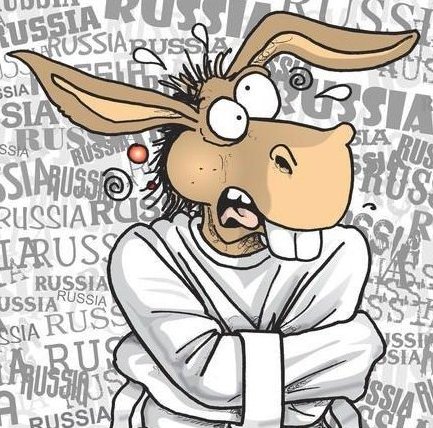
While serving as Obama’s Secretary of State Hillary Clinton used unsecure servers, and unsecure mobile devices to transmit classified documents and even communicated with POTUS#44 over unsecure networks from hostile nations – Of Course Russia hacked into the DNC server, most likely using a BHO/HRC back door access, or maybe there are BHO hidden and unsecure servers containing classified documents (like a presidential blackberry or two)? And how is it that Congressional Democrats employ 3 foreign national “Internet Technicians” giving them free access to DNC computer systems, records and more without anyone the wiser? So why have Team Mueller and his high powered Democrat investigators not discovered how a real Russian Collusion could have happened?

No evidence of Trump Campaign – Russia Collusion? I’d say that maybe it’s time to examine the examiners? Just saying…….I am the Real Truckmaster!

Realtruckmaster.blog

10 Things You Might Not Know About America’s Independence

Document

7-2-2018

 10 Things You Might Not Know About America’s Independence

How much do you know about early American history? If you were like me going to school in the 50s – 60s history was among the school subjects which I didn’t absorb too well. In fact I consider myself lucky just to make it through in the 12 years required to graduate. Our family moved around and I went to various schools in Southwestern Idaho and Eastern Oregon. After graduating from Kuna High School in Kuna, Idaho with the class of 1967 I probably forgot most of what I was taught particularly American History.

In September 1967 I enlisted in the Army and became a truck driver where I went to Southeast Asia during the Vietnam War. Over the next 22 years I had little opportunity to continue my secondary education, except on a part-time basis. That’s why it only took me 17 years to obtain my 2-year Associates Degree in General Studies. WooHoo!

It wasn’t until I was at the end of my Army career that was able to take courses in American History to complete my Associates Degree requirements. As fate would have it I was in a land far, far away, geographically separated from my family in Colorado that another Idahoan crossed paths with me.

As my mind fails me once in a while and I can’t remember his name (I may have to come back and edit this article to give proper credit to him), I will refer to him as “Professor Fonzie”. He was from Boise, Idaho and was a year older than I and a graduate from Boise High School class of 1966. I remember he said in school his dress was like that of Henry Winkler on Happy Days, leather jacket, slicked back hair and he rode a motorcycle. He was the guy the teachers said would never amount to anything. After graduating (said they really didn’t want to put up with him any longer), he joined the Army and served one enlistment before getting out and using the GI Bill to get his PHD.

He represented the University of Maryland’s Far East campus at Camp Zama, Japan and I was nearby at Yokohama, Japan and commuted to the weekly classes. All I remember about his classes on Early American History, the industrial revolution and up to recent history at the time was that he seldom opened the textbook. He gave out assignments, pop quizzes and lectured in such a way as to bring history alive.

So back to 2018 and the upcoming July 4th celebration, I thought it was be interesting to find out whether what I thought I knew and what I actually didn’t know were one in the same? I came across this article published on Fox News on July 4th, 2011 and there really is a lot of history that I (let’s not say I didn’t know) misremembered as shown in these 10 things you might not know about our independence celebration. – I am the Real Truckmaster!

Realtruckmaster.blog


Published July 4th, 2011 on Fox News

http://www.foxnews.com/us/2011/07/04/10-things-might-not-know-about-our-independence.html

On July Fourth, Americans eat hot dogs and apple pie, watch fireworks, and go swimming.

But what are we really celebrating?

Standard answers to this question are that we are celebrating our independence or the signing of the Declaration of Independence. Well, yes and no.

Here are 10 things you might not know about our America’s Independence Celebration

1.) Independence Was Not Declared on July Fourth: The second Continental Congress actually voted for independence on July 2. In fact, John Adams wrote to his wife, Abigail, predicting that future generations would celebrate July 2 as Independence Day, saying, “The second day of July, 1776, will be celebrated by succeeding generations as the great anniversary festival. It ought to be solemnized with pomp and parade, with shows, games, sports, guns, bells, bonfires, and illumination, from one end of this continent to the other, from this time forward forevermore.” July 4, 1776 is significant because that is the day that Congress officially adopted the Declaration of Independence document, but contrary to what many people believe it was not signed on the July 4. The official signing ceremony occurred on August 2, which is when most of the signers affixed their names to the document, but other representatives signed the document throughout the summer of 1776. Finally, there is no historical record of John Hancock saying that his signature is that big so that King George could read it. It has been suggested that Hancock’s is by far the largest signature simply because he was the president of Congress.

2.) New York Was Late: When the Continental Congress declared independence from Britain the official vote was 12 in favor, 0 against. But wait, you may ask, weren’t there 13 colonies? Where is that last one? The answer: The colony of New York abstained from the original vote on July 2. New York did not decide to join until July 19.

3.) It Was a States Thing First: Independence was not something that was confined to Congress. It started out as a state and local thing. In fact, the very first Declaration of Independence came on Oct. 4, 1774 (21 months before the Continental Congress declared independence) from the town of Worcester, Mass. During the next 21 months a total of 90 state and local declarations of independence would be made. When Virginia declared its independence in May 1776, they sent Rep. Richard Henry Lee to the Continental Congress with specific instructions to put forth a resolution of independence for Congress to vote on, thus allying all the colonies — soon to become states — against the British Empire in the War for Independence.

4.) American Troops Did Not fight Under the American Flag During the Revolution: The Fourth of July is always accompanied by a lot of flag waving, but the soldiers of the American Revolution did not actually fight under the American flag. In fact, our Founders did not really consider the flag to be all that important and the design of the flag varied both in the number of stripes and in the formation of the stars. The reason a uniform flag was adopted was so that our navy ships could be easily identified when arriving in foreign ports, but the boys in the Continental Army did not fight under this flag. In fact, the United States flag was considered so irrelevant that in 1794 when someone introduced a bill in Congress to add two stars to the flag in representation of the entrance of Vermont and Kentucky into the Union many members of the House considered it to be too trivial to pay any attention to. One representative is on record saying that this matter was “a trifling business which ought not to engross the attention of the House, when it was it was their duty to discuss matters of infinitely greater importance.” In the end, the bill was passed simply to be rid of it. The Continental Army did still fight under flags, but these flags were all different depending on the regiment.

5.) Our Founding Fathers Were Not Radicals: As Americans, we like to think that what we did in the American Revolution was original and that our ideas of freedom and rights were new and progressive. But the truth is our Founding Fathers were not radical new thinkers — all of their ideas and philosophies were rooted deeply in history. Ideas of people’s rights, liberty, and social contracts can be traced all the way back through our colonial history, most famously with the Mayflower Compact, and even further through British history and English common law. These ideas can even be seen at work in the medieval era with Magna Carta first established 1215. Our Founding Fathers sought independence in order to preserve their “natural-born rights as Englishmen.”  Though it is true no colony had ever succeeded from the mother country before and the British were quick to call it treason, everything our Founders did was, in fact, legal. Jefferson himself explains that the Declaration was not meant to express anything new. He said it was “not to find out new principles, or new arguments, never before thought of, not merely to say things which had never been said before, but to place before mankind the common sense of the subject.”

6.) We Are Not a Democracy: People often associate democracy with freedom. We hear this word used all the time by our politicians, by our neighbors, even sometimes by our educators. But the fact is we are not a democracy. We are a republic. Our Founding Fathers deemed this an important distinction to make and discussed the matter quite a bit. In the end, our Founding Fathers claimed that a democracy was both extreme and dangerous for a country as it would most assuredly result in the oppression of the minority by the majority. Take this one example from Founding Father, Elbridge Gerry: “The evils we experience flow from the excess of democracy.” And Thomas Jefferson said that democracy should never be practiced outside the limits of a town. Our Founders were very wary of power no matter who had it and thus limited it as much as possible — this is why we have such a unique system of checks and balances.

7.) Jefferson-Hemings Scandal–Not So Scandalous After All? With Independence Day comes a lot of talk about the Declaration of Independence and with that talk comes references to Thomas Jefferson, which these days will inevitably end with the Sally Hemings scandal. The claim that Jefferson fathered children with Hemings started by Jefferson’s political rival Alexander Hamilton as an attempt to smear and discredit him. In the past several years these claims got a lot of media attention when a DNA test was done on the descendants of Sally Hemings, which led people to claim that Thomas Jefferson was definitively the father of her children. However, the matter is far from settled and there are still historians on both sides of the aisle in this debate. The DNA test actually proves that a male from the Jefferson family fathered Sally Hemings’ children –that’s a number of possibilities. At this point, science cannot actually provide us with a definitive answer on the subject.

8.) Our Founding Fathers Would Not Have Recited the Pledge: Another patriotic tradition that gets a lot of attention, particularly around this time of the year, is the Pledge of Allegiance. The Pledge did not exist during our Founders’ lifetimes — something that is very clear when looking at its text. The Pledge was written over a century after America’s founding in 1892. It was also written by a socialist — Francis Bellamy, whose original text was: “I pledge allegiance to my Flag and the Republic for which it stands, one nation, indivisible, with liberty and justice for all.” According to our Founders, the states are not indivisible, but very much the opposite. In fact, when ratifying the U.S. Constitution, some states, such as Virginia among others, specifically declared the right to secede from the Union should they feel it necessary just as an extra precaution to make sure that that state right was understood. Our Founders took their states rights very seriously and considered the U.S. Constitution to be a compact amongst the sovereign states so that any state could secede if it felt the federal government had become oppressive. So, if not with a pledge, how would our Founding Fathers begin meetings and celebrations? The answer: most likely with a prayer. In fact, the very first resolution brought before the First Continental Congress, and immediately passed, was the declaration that they would open every meeting with a prayer.

9.) The Midnight Ride of Paul Revere . . . and 40 others? The mythology of Paul Revere’s midnight ride can be traced back to the year 1860 with the writing of that famous poem, “Paul Revere’s Ride.” Here’s what really happened: On April 18, 1775, British troops were ordered to arrest John Hancock and Samuel Adams, both of whom were in Lexington at the time and to seize arms and provisions at Concord. Upon hearing this, Paul Revere and William Dawes set out on horseback — taking two different routes to Lexington in order to warn Hancock and Adams. Along the way, they warned the towns they passed through of the British invasion. By the morning of April 19 roughly 40 men were out on horseback spreading the news. Revere arrived at Lexington first, followed by Dawes. The two men then headed toward Concord, but were intercepted by British troops. Dawes, though injured, managed to escape, but Revere was captured. He was rescued by American militiamen a short while later. It was during this confrontation between British troops and American militiamen at Concord that the famous shot heard ’round the world was fired.

10.) The British Soldiers of the Boston Massacre Were Defended by John Adams in Court: The Boston Massacre, on March 5, 1770, began with a riot and ended with British troops killing five men. The incident help spark the greater rebellion, which led to the Revolutionary War, but tensions had been rising in Boston since British troops had occupied the city in 1768. But you may be surprised to know that one of the Founding Fathers actually defended the British soldiers that were charged of killing the civilians. John Adams, like many of our Founding Fathers, was a lawyer, and though he was a Patriot, he firmly believed in the right to a fair trial and agreed to represent the British troops in court. Adams succeeded in getting Capt. Thomas Preston acquitted as most others. And the two soldiers who were convicted were spared the death penalty.

So this July Fourth, research what you’re celebrating and talk about it with your family. Benjamin Franklin said that we have Republic, if we can keep it. Former Congressman and author of the book “In Tune with America: our History in Song,” George Nethercutt Jr. put it this way: “The foundation of the freedoms we enjoy as Americans is the U.S. Constitution, the longest surviving constitution of any nation in history. To be civically unaware is to diminish our freedom, but knowing our history makes us all better Americans. Read our nation’s Founding documents and they will inspire you.”


Constitution of the United States

Constitution

Constitution of the United States

www.senate.gov


Introduction


Written in 1787, ratified in 1788, and in operation since 1789, the United States Constitution is the world’s longest surviving written charter of government. Its first three words – “We The People” – affirm that the government of the United States exists to serve its citizens. The supremacy of the people through their elected representatives is recognized in Article I, which creates a Congress consisting of a Senate and a House of Representatives. The positioning of Congress at the beginning of the Constitution affirms its status as the “First Branch” of the federal government.


The Constitution assigned to Congress responsibility for organizing the executive and judicial branches, raising revenue, declaring war, and making all laws necessary for executing these powers. The president is permitted to veto specific legislative acts, but Congress has the authority to override presidential vetoes by two-thirds majorities of both houses. The Constitution also provides that the Senate advise and consent on key executive and judicial appointments and on the approval for ratification of treaties.

For over two centuries the Constitution has remained in force because its framers successfully separated and balanced governmental powers to safeguard the interests of majority rule and minority rights, of liberty and equality, and of the federal and state governments. More a concise statement of national principles than a detailed plan of governmental operation, the Constitution has evolved to meet the changing needs of a modern society profoundly different from the eighteenth-century world in which its creators lived. To date, the Constitution has been amended 27 times, most recently in 1992. The first ten amendments constitute the Bill of Rights.


Annotated Constitutions


The Constitution of the United States of America: Analysis and Interpretation (popularly known as the Constitution Annotated) contains legal analysis and interpretation of the United States Constitution, based primarily on Supreme Court case law.


The Constitution of the United States of America, S.PUB.103-21 (1994) (pdf), prepared by the Office of the Secretary of the Senate with the assistance of Johnny H. Killian of the Library of Congress in 1994, provided the original text of each clause of the Constitution with an accompanying explanation of its meaning and how that meaning changed over time.


Original Text


Preamble


We the People of the United States, in Order to form a more perfect Union, establish Justice, insure domestic Tranquility, provide for the common defense, promote the general Welfare, and secure the Blessings of Liberty to ourselves and our Posterity, do ordain and establish this Constitution for the United States of America.


Article I

Section 1   Section 2   Section 3   Section 4   Section 5   Section 6   Section 7   Section 8   Section 9   Section 10


Section 1


All legislative Powers herein granted shall be vested in a Congress of the United States, which shall consist of a Senate and a House of Representatives.


Section 2


The House of Representatives shall be comprised of Members chosen every second Year by the People of the several State, and the Electors in each state shall have the Qualifications requisite for Electors of the most numerous Branch of the State Legislature.


No Person shall be a Representative who shall not have attained to the Age of twenty five Years, and been seven Years a Citizen of the United States, and who shall not, when elected, be an Inhabitant of that State in which he shall be chosen.


Representatives and direct Taxes shall be apportioned among the several States which may be included within this Union, according to their respective Numbers, which shall be determined by adding to the whole Number of free Persons, including those bound to Service for a Term of Years, and excluding Indians not taxed, three fifths of all other Persons. The actual Enumeration shall be made within three Years after the first Meeting of the Congress of the United States, and within every subsequent Term of ten Years, in such Manner as they shall by Law direct. The Number of Representatives shall not exceed one for every thirty Thousand, but each State shall have at Least one Representative; and until such enumeration shall be made, the State of New Hampshire shall be entitled to chuse three, Massachusetts eight, Rhode-Island and Providence Plantations one, Connecticut five, New-York six, New Jersey four, Pennsylvania eight, Delaware one, Maryland six, Virginia ten, North Carolina five, South Carolina five, and Georgia three.


When vacancies happen in the Representation from any State, the Executive Authority thereof shall issue Writs of Election to fill such Vacancies.


The House of Representatives shall chuse their Speaker and other Officers; and shall have the sole Power of Impeachment.


Section 3


The Senate of the United States shall be composed of two Senators from each State, chosen by the Legislature thereof, for six Years; and each Senator shall have one Vote.


Immediately after they shall be assembled in Consequence of the first Election, they shall be divided as equally as may be into three Classes. The Seats of the Senators of the first Class shall be vacated at the Expiration of the second Year, of the second Class at the Expiration of the fourth Year, and of the third Class at the Expiration of the sixth Year, so that one third may be chosen every second Year; and if Vacancies happen by Resignation, or otherwise, during the Recess of the Legislature of any State, the Executive thereof may make temporary Appointments until the next Meeting of the Legislature, which shall then fill such Vacancies.


No Person shall be a Senator who shall not have attained to the Age of thirty Years, and been nine Years a Citizen of the United States, and who shall not, when elected, be an Inhabitant of that State for which he shall be chosen.


The Vice President of the United States shall be President of the Senate, but shall have no Vote, unless they be equally divided.


The Senate shall chuse their other Officers, and also a President pro tempore, in the Absence of the Vice President, or when he shall exercise the Office of President of the United States.


The Senate shall have the sole Power to try all Impeachments. When sitting for that Purpose, they shall be on Oath or Affirmation. When the President of the United States is tried, the Chief Justice shall preside: And no Person shall be convicted without the Concurrence of two thirds of the Members present.


Judgment in Cases of Impeachment shall not extend further than to removal from Office, and disqualification to hold and enjoy any Office of honor, Trust or Profit under the United States: but the Party convicted shall nevertheless be liable and subject to Indictment, Trial, Judgment and Punishment, according to Law.


Section 4


The Times, Places and Manner of holding Elections for Senators and Representatives, shall be prescribed in each State by the Legislature thereof; but the Congress may at any time by Law make or alter such Regulations, except as to the Places of chusing Senators.


The Congress shall assemble at least once in every Year, and such Meeting shall be on the first Monday in December, unless they shall by Law appoint a different Day.


Section 5


Each House shall be the Judge of the Elections, Returns and Qualifications of its own Members, and a Majority of each shall constitute a Quorum to do Business; but a smaller Number may adjourn from day to day, and may be authorized to compel the Attendance of absent Members, in such Manner, and under such Penalties as each House may provide.


Each House may determine the Rules of its Proceedings, punish its Members for disorderly Behaviour, and, with the Concurrence of two thirds, expel a Member.


Each House shall keep a Journal of its Proceedings, and from time to time publish the same, excepting such Parts as may in their Judgment require Secrecy; and the Yeas and Nays of the Members of either House on any question shall, at the Desire of one fifth of those Present, be entered on the Journal.


Neither House, during the Session of Congress, shall, without the Consent of the other, adjourn for more than three days, nor to any other Place than that in which the two Houses shall be sitting.


Section 6


The Senators and Representatives shall receive a Compensation for their Services, to be ascertained by Law, and paid out of the Treasury of the United States. They shall in all Cases, except Treason, Felony and Breach of the Peace, be privileged from Arrest during their Attendance at the Session of their respective Houses, and in going to and returning from the same; and for any Speech or Debate in either House, they shall not be questioned in any other Place.


No Senator or Representative shall, during the Time for which he was elected, be appointed to any civil Office under the Authority of the United States, which shall have been created, or the Emoluments whereof shall have been encreased during such time; and no Person holding any Office under the United States, shall be a Member of either House during his Continuance in Office.


Section 7


All Bills for raising Revenue shall originate in the House of Representatives; but the Senate may propose or concur with Amendments as on other Bills.


Every Bill which shall have passed the House of Representatives and the Senate, shall, before it become a Law, be presented to the President of the United States: If he approve he shall sign it, but if not he shall return it, with his Objections to that House in which it shall have originated, who shall enter the Objections at large on their Journal, and proceed to reconsider it.  If after such Reconsideration two thirds of that House shall agree to pass the Bill, it shall be sent, together with the Objections, to the other House, by which it shall likewise be reconsidered, and if approved by two thirds of that House, it shall become a Law. But in all such Cases the Votes of both Houses shall be determined by Yeas and Nays, and the Names of the Persons voting for and against the Bill shall be entered on the Journal of each House respectively. If any Bill shall not be returned by the President within ten Days (Sundays excepted) after it shall have been presented to him, the Same shall be a Law, in like Manner as if he had signed it, unless the Congress by their Adjournment prevent its Return, in which Case it shall not be a Law.


Every Order, Resolution, or Vote to which the Concurrence of the Senate and House of Representatives may be necessary (except on a question of Adjournment) shall be presented to the President of the United States; and before the Same shall take Effect, shall be approved by him, or being disapproved by him, shall be repassed by two thirds of the Senate and House of Representatives, according to the Rules and Limitations prescribed in the Case of a Bill.


Section 8


The Congress shall have Power To lay and collect Taxes, Duties, Imposts and Excises, to pay the Debts and provide for the common Defence and general Welfare of the United States; but all Duties, Imposts and Excises shall be uniform throughout the United States;


To borrow Money on the credit of the United States;


To regulate Commerce with foreign Nations, and among the several States, and with the Indian Tribes;


To establish an uniform Rule of Naturalization, and uniform Laws on the subject of Bankruptcies throughout the United States;


To coin Money, regulate the Value thereof, and of foreign Coin, and fix the Standard of Weights and Measures;


To provide for the Punishment of counterfeiting the Securities and current Coin of the United States;


To establish Post Offices and post Roads;


To promote the Progress of Science and useful Arts, by securing for limited Times to Authors and Inventors the exclusive Right to their respective Writings and Discoveries;


To constitute Tribunals inferior to the supreme Court;


To define and punish Piracies and Felonies committed on the high Seas, and Offences against the Law of Nations;


To declare War, grant Letters of Marque and Reprisal, and make Rules concerning Captures on Land and Water;


To raise and support Armies, but no Appropriation of Money to that Use shall be for a longer Term than two Years;


To provide and maintain a Navy;


To make Rules for the Government and Regulation of the land and naval Forces;


To provide for calling forth the Militia to execute the Laws of the Union, suppress Insurrections and repel Invasions;


To provide for organizing, arming, and disciplining, the Militia, and for governing such Part of them as may be employed in the Service of the United States, reserving to the States respectively, the Appointment of the Officers, and the Authority of training the Militia according to the discipline prescribed by Congress;


To exercise exclusive Legislation in all Cases whatsoever, over such District (not exceeding ten Miles square) as may, by Cession of particular States, and the Acceptance of Congress, become the Seat of the Government of the United States, and to exercise like Authority over all Places purchased by the Consent of the Legislature of the State in which the Same shall be, for the Erection of Forts, Magazines, Arsenals, dock-Yards, and other needful Buildings;—And


To make all Laws which shall be necessary and proper for carrying into Execution the foregoing Powers, and all other Powers vested by this Constitution in the Government of the United States, or in any Department or Officer thereof.


Section 9


The Migration or Importation of such Persons as any of the States now existing shall think proper to admit, shall not be prohibited by the Congress prior to the Year one thousand eight hundred and eight, but a Tax or duty may be imposed on such Importation, not exceeding ten dollars for each Person.


The Privilege of the Writ of Habeas Corpus shall not be suspended, unless when in Cases of Rebellion or Invasion the public Safety may require it.


No Bill of Attainder or ex post facto Law shall be passed.


No Capitation, or other direct, Tax shall be laid, unless in Proportion to the Census or enumeration herein before directed to be taken.


No Tax or Duty shall be laid on Articles exported from any State.


No Preference shall be given by any Regulation of Commerce or Revenue to the Ports of one State over those of another; nor shall Vessels bound to, or from, one State, be obliged to enter, clear, or pay Duties in another.


No Money shall be drawn from the Treasury, but in Consequence of Appropriations made by Law; and a regular Statement and Account of the Receipts and Expenditures of all public Money shall be published from time to time.


No Title of Nobility shall be granted by the United States: And no Person holding any Office of Profit or Trust under them, shall, without the Consent of the Congress, accept of any present, Emolument, Office, or Title, of any kind whatever, from any King, Prince, or foreign State.


Section 10


No State shall enter into any Treaty, Alliance, or Confederation; grant Letters of Marque and Reprisal; coin Money; emit Bills of Credit; make any Thing but gold and silver Coin a Tender in Payment of Debts; pass any Bill of Attainder, ex post facto Law, or Law impairing the Obligation of Contracts, or grant any Title of Nobility.


No State shall, without the Consent of the Congress, lay any Imposts or Duties on Imports or Exports, except what may be absolutely necessary for executing its inspection Laws: and the net Produce of all Duties and Imposts, laid by any State on Imports or Exports, shall be for the Use of the Treasury of the United States; and all such Laws shall be subject to the Revision and Control of the Congress.


No State shall, without the Consent of Congress, lay any Duty of Tonnage, keep Troops, or Ships of War in time of Peace, enter into any Agreement or Compact with another State, or with a foreign Power, or engage in War, unless actually invaded, or in such imminent Danger as will not admit of delay.


Article II


Section 1


The executive Power shall be vested in a President of the United States of America. He shall hold his Office during the Term of four Years, and, together with the Vice President, chosen for the same Term, be elected, as follows:


Each State shall appoint, in such Manner as the Legislature thereof may direct, a Number of Electors, equal to the whole Number of Senators and Representatives to which the State may be entitled in the Congress: but no Senator or Representative, or Person holding an Office of Trust or Profit under the United States, shall be appointed an Elector.


The Electors shall meet in their respective States, and vote by Ballot for two Persons, of whom one at least shall not be an Inhabitant of the same State with themselves. And they shall make a List of all the Persons voted for, and of the Number of Votes for each; which List they shall sign and certify, and transmit sealed to the Seat of the Government of the United States, directed to the President of the Senate. The President of the Senate shall, in the Presence of the Senate and House of Representatives, open all the Certificates, and the Votes shall then be counted. The Person having the greatest Number of Votes shall be the President, if such Number be a Majority of the whole Number of Electors appointed; and if there be more than one who have such Majority, and have an equal Number of Votes, then the House of Representatives shall immediately chuse by Ballot one of them for President; and if no Person have a Majority, then from the five highest on the List the said House shall in like Manner chuse the President. But in chusing the President, the Votes shall be taken by States, the Representatives from each State having one Vote; a quorum for this Purpose shall consist of a Member or Members from two thirds of the States, and a Majority of all the States shall be necessary to a Choice. In every Case, after the Choice of the President, the Person having the greatest Number of Votes of the Electors shall be the Vice President. But if there should remain two or more who have equal Votes, the Senate shall chuse from them by Ballot the Vice-President.


The Congress may determine the Time of chusing the Electors, and the Day on which they shall give their Votes; which Day shall be the same throughout the United States.


No Person except a natural born Citizen, or a Citizen of the United States, at the time of the Adoption of this Constitution, shall be eligible to the Office of President; neither shall any person be eligible to that Office who shall not have attained to the Age of thirty five Years, and been fourteen Years a Resident within the United States.


In Case of the Removal of the President from Office, or of his Death, Resignation, or Inability to discharge the Powers and Duties of the said Office, the Same shall devolve on the Vice President, and the Congress may by Law provide for the Case of Removal, Death, Resignation or Inability, both of the President and Vice President, declaring what Officer shall then act as President, and such Officer shall act accordingly, until the Disability be removed, or a President shall be elected.


The President shall, at stated Times, receive for his Services, a Compensation, which shall neither be encreased nor diminished during the Period for which he shall have been elected, and he shall not receive within that Period any other Emolument from the United States, or any of them.


Before he enter on the Execution of his Office, he shall take the following Oath or Affirmation:—”I do solemnly swear (or affirm) that I will faithfully execute the Office of President of the United States, and will to the best of my Ability, preserve, protect and defend the Constitution of the United States.”


Section 2


The President shall be Commander in Chief of the Army and Navy of the United States, and of the Militia of the several States, when called into the actual Service of the United States; he may require the Opinion, in writing, of the principal Officer in each of the executive Departments, upon any Subject relating to the Duties of their respective Offices, and he shall have Power to Grant Reprieves and Pardons for Offences against the United States, except in Cases of Impeachment.


He shall have Power, by and with the Advice and Consent of the Senate, to make Treaties, provided two thirds of the Senators present concur; and he shall nominate, and by and with the Advice and Consent of the Senate, shall appoint Ambassadors, other public Ministers and Consuls, Judges of the supreme Court, and all other Officers of the United States, whose Appointments are not herein otherwise provided for, and which shall be established by Law: but the Congress may by Law vest the Appointment of such inferior Officers, as they think proper, in the President alone, in the Courts of Law, or in the Heads of Departments.


The President shall have Power to fill up all Vacancies that may happen during the Recess of the Senate, by granting Commissions which shall expire at the End of their next Session.


Section 3


He shall from time to time give to the Congress Information on the State of the Union, and recommend to their Consideration such Measures as he shall judge necessary and expedient; he may, on extraordinary Occasions, convene both Houses, or either of them, and in Case of Disagreement between them, with Respect to the Time of Adjournment, he may adjourn them to such Time as he shall think proper; he shall receive Ambassadors and other public Ministers; he shall take Care that the Laws be faithfully executed, and shall Commission all the Officers of the United States.


Section 4


The President, Vice President and all Civil Officers of the United States, shall be removed from Office on Impeachment for, and Conviction of, Treason, Bribery, or other high Crimes and Misdemeanors.


Article III


Section 1


The judicial Power of the United States, shall be vested in one supreme Court, and in such inferior Courts as the Congress may from time to time ordain and establish. The Judges, both of the supreme and inferior Courts, shall hold their Offices during good Behaviour, and shall, at stated Times, receive for their Services, a Compensation, which shall not be diminished during their Continuance in Office.


Section 2


The judicial Power shall extend to all Cases, in Law and Equity, arising under this Constitution, the Laws of the United States, and Treaties made, or which shall be made, under their Authority;—to all Cases affecting Ambassadors, other public ministers and Consuls;—to all Cases of admiralty and maritime Jurisdiction;—to Controversies to which the United States shall be a Party;—to Controversies between two or more States;—between a State and Citizens of another State;—between Citizens of different States;—between Citizens of the same State claiming Lands under Grants of different States, and between a State, or the Citizens thereof, and foreign States, Citizens or Subjects.


In all Cases affecting Ambassadors, other public Ministers and Consuls, and those in which a State shall be Party, the supreme Court shall have original Jurisdiction. In all the other Cases before mentioned, the supreme Court shall have appellate Jurisdiction, both as to Law and Fact, with such Exceptions, and under such Regulations as the Congress shall make.


The Trial of all Crimes, except in Cases of Impeachment, shall be by Jury; and such Trial shall be held in the State where the said Crimes shall have been committed; but when not committed within any State, the Trial shall be at such Place or Places as the Congress may by Law have directed.


Section 3


Treason against the United States, shall consist only in levying War against them, or in adhering to their Enemies, giving them Aid and Comfort. No Person shall be convicted of Treason unless on the Testimony of two Witnesses to the same overt Act, or on Confession in open Court.


The Congress shall have Power to declare the Punishment of Treason, but no Attainder of Treason shall work Corruption of Blood, or Forfeiture except during the Life of the Person attainted.


Article IV


Section 1


Full Faith and Credit shall be given in each State to the public Acts, Records, and judicial Proceedings of every other State. And the Congress may by general Laws prescribe the Manner in which such Acts, Records and Proceedings shall be proved, and the Effect thereof.


Section 2


The Citizens of each State shall be entitled to all Privileges and Immunities of Citizens in the several States.


A Person charged in any State with Treason, Felony, or other Crime, who shall flee from Justice, and be found in another State, shall on Demand of the executive Authority of the State from which he fled, be delivered up, to be removed to the State having Jurisdiction of the Crime.


No Person held to Service or Labour in one State, under the Laws thereof, escaping into another, shall, in Consequence of any Law or Regulation therein, be discharged from such Service or Labour, but shall be delivered up on Claim of the Party to whom such Service or Labour may be due.


Section 3


New States may be admitted by the Congress into this Union; but no new State shall be formed or erected within the Jurisdiction of any other State; nor any State be formed by the Junction of two or more States, or Parts of States, without the Consent of the Legislatures of the States concerned as well as of the Congress.


The Congress shall have Power to dispose of and make all needful Rules and Regulations respecting the Territory or other Property belonging to the United States; and nothing in this Constitution shall be so construed as to Prejudice any Claims of the United States, or of any particular State.


Section 4


The United States shall guarantee to every State in this Union a Republican Form of Government, and shall protect each of them against Invasion; and on Application of the Legislature, or of the Executive (when the Legislature cannot be convened) against domestic Violence.


Article V   


The Congress, whenever two thirds of both Houses shall deem it necessary, shall propose Amendments to this Constitution, or, on the Application of the Legislatures of two thirds of the several States, shall call a Convention for proposing Amendments, which, in either Case, shall be valid to all Intents and Purposes, as Part of this Constitution, when ratified by the Legislatures of three fourths of the several States, or by Conventions in three fourths thereof, as the one or the other Mode of Ratification may be proposed by the Congress; Provided that no Amendment which may be made prior to the Year One thousand eight hundred and eight shall in any Manner affect the first and fourth Clauses in the Ninth Section of the first Article; and that no State, without its Consent, shall be deprived of its equal Suffrage in the Senate.


Article VI         


All Debts contracted and Engagements entered into, before the Adoption of this Constitution, shall be as valid against the United States under this Constitution, as under the Confederation.


This Constitution, and the Laws of the United States which shall be made in Pursuance thereof; and all Treaties made, or which shall be made, under the Authority of the United States, shall be the supreme Law of the Land; and the Judges in every State shall be bound thereby, any Thing in the Constitution or Laws of any state to the Contrary notwithstanding.


The Senators and Representatives before mentioned, and the Members of the several State Legislatures, and all executive and judicial Officers, both of the United States and of the several States, shall be bound by Oath or Affirmation, to support this Constitution; but no religious Test shall ever be required as a Qualification to any Office or public Trust under the United States.


Article VII  


The Ratification of the Conventions of nine States, shall be sufficient for the Establishment of this Constitution between the States so ratifying the Same.


Done in Convention by the Unanimous Consent of the States present the Seventeenth Day of September in the Year of our Lord one thousand seven hundred and Eighty seven and of the Independence of the United States of America the Twelfth In Witness whereof We have hereunto subscribed our Names,

Go. Washington—Presidt.

And deputy from Virginia

New Hampshire                   John Langdon

Nicholas Gilman

Massachusetts                     Nathaniel Gorham

Rufus King

Connecticut                          Wm. Saml. Johnson

Roger Sherman

New York                               Alexander Hamilton

New Jersey                             Wil: Livingston

David Brearley

Wm. Paterson

Jona. Dayton

Pennsylvania                          B Franklin

Thomas Mifflin

Robt Morris

Geo. Clymer

Thos. FitzSimons

Jared Ingersoll

James Wilson

Gouv Morris

Delaware                                Geo: Read

Gunning Bedford jun

John Dickinson

Richard Bassett

Jaco: Broom

Maryland                                 James McHenry

Dan of St. Thos. Jenifer

Danl Carroll

Virginia                                     John Blair

James Madison Jr.

North Carolina                         Wm. Blount

Richd. Dobbs Spaight

Hu Williamson

South Carolina                         J. Rutledge

Charles Cotesworth Pinckney

Charles Pinckney

Pierce Butler

Georgia                                     William Few

Abr Baldwin

Attest William Jackson Secretary


AMENDMENTS

Amendment I (1791)                 Amendment II (1791)

Amendment III (1791)              Amendment IV (1791)

Amendment V (1791)               Amendment VI (1791)

Amendment VII (1791)             Amendment VIII (1791)

Amendment IX (1791)              Amendment X (1791)

Amendment XI (1795/1798)   Amendment XII (1804)

Amendment XIII (1865)            Amendment XIV (1868)

Amendment XV (1870)             Amendment XVI (1913)

Amendment XVII (1913)           Amendment XVIII (1919)

Amendment XIX (1920)            Amendment XX (1933)

Amendment XXI (1933)            Amendment XXII (1951)

Amendment XXIII (1961)          Amendment XXIV (1964)

Amendment XXV (1967)           Amendment XXVI (1971)

Amendment XXVII (1992)


Amendment I (1791)

Congress shall make no law respecting an establishment of religion, or prohibiting the free exercise thereof; or abridging the freedom of speech, or of the press; or the right of the people peaceably to assemble, and to petition the Government for a redress of grievances.


Amendment II (1791)

A well regulated Militia, being necessary to the security of a free State, the right of the people to keep and bear Arms, shall not be infringed.


Amendment III (1791)

No Soldier shall, in time of peace be quartered in any house, without the consent of the Owner, nor in time of war, but in a manner to be prescribed by law.


Amendment IV (1791)

The right of the people to be secure in their persons, houses, papers, and effects, against unreasonable searches and seizures, shall not be violated, and no Warrants shall issue, but upon probable cause, supported by Oath or affirmation, and particularly describing the place to be searched, and the persons or things to be seized.


Amendment V (1791)

No person shall be held to answer for a capital, or otherwise infamous crime, unless on a presentment or indictment of a Grand Jury, except in cases arising in the land or naval forces, or in the Militia, when in actual service in time of War or public danger; nor shall any person be subject for the same offence to be twice put in jeopardy of life or limb; nor shall be compelled in any criminal case to be a witness against himself, nor be deprived of life, liberty, or property, without due process of law; nor shall private property be taken for public use, without just compensation.


Amendment VI (1791)

In all criminal prosecutions, the accused shall enjoy the right to a speedy and public trial, by an impartial jury of the State and district wherein the crime shall have been committed, which district shall have been previously ascertained by law, and to be informed of the nature and cause of the accusation; to be confronted with the witnesses against him; to have compulsory process for obtaining witnesses in his favor, and to have the Assistance of Counsel for his defence.


Amendment VII (1791)

In Suits at common law, where the value in controversy shall exceed twenty dollars, the right of trial by jury shall be preserved, and no fact tried by a jury, shall be otherwise re-examined in any Court of the United States, than according to the rules of the common law.


Amendment VIII (1791)

Excessive bail shall not be required, nor excessive fines imposed, nor cruel and unusual punishments inflicted.


Amendment IX (1791)

The enumeration in the Constitution, of certain rights, shall not be construed to deny or disparage others retained by the people.


Amendment X (1791)

The powers not delegated to the United States by the Constitution, nor prohibited by it to the States, are reserved to the States respectively, or to the people.


Amendment XI (1795/1798)

The Judicial power of the United States shall not be construed to extend to any suit in law or equity, commenced or prosecuted against one of the United States by Citizens of another State, or by Citizens or Subjects of any Foreign State.


Amendment XII (1804)

The Electors shall meet in their respective states and vote by ballot for President and Vice-President, one of whom, at least, shall not be an inhabitant of the same state with themselves; they shall name in their ballots the person voted for as President, and in distinct ballots the person voted for as Vice-President, and they shall make distinct lists of all persons voted for as President, and of all persons voted for as Vice-President, and of the number of votes for each, which lists they shall sign and certify, and transmit sealed to the seat of the government of the United States, directed to the President of the Senate;—The President of the Senate shall, in the presence of the Senate and House of Representatives, open all the certificates and the votes shall then be counted;—The person having the greatest Number of votes for President, shall be the President, if such number be a majority of the whole number of Electors appointed; and if no person have such majority, then from the persons having the highest numbers not exceeding three on the list of those voted for as President, the House of Representatives shall choose immediately, by ballot, the President. But in choosing the President, the votes shall be taken by states, the representation from each state having one vote; a quorum for this purpose shall consist of a member or members from two-thirds of the states, and a majority of all the states shall be necessary to a choice. And if the House of Representatives shall not choose a President whenever the right of choice shall devolve upon them, before the fourth day of March next following, then the Vice-President shall act as President, as in the case of the death or other constitutional disability of the President—The person having the greatest number of votes as Vice-President, shall be the Vice-President, if such number be a majority of the whole number of Electors appointed, and if no person have a majority, then from the two highest numbers on the list, the Senate shall choose the Vice-President; a quorum for the purpose shall consist of two-thirds of the whole number of Senators, and a majority of the whole number shall be necessary to a choice. But no person constitutionally ineligible to the office of President shall be eligible to that of Vice-President of the United States.


Amendment XIII (1865)

Section 1. Neither slavery nor involuntary servitude, except as a punishment for crime whereof the party shall have been duly convicted, shall exist within the United States, or any place subject to their jurisdiction.

Section 2. Congress shall have power to enforce this article by appropriate legislation.


Amendment XIV (1868)

Section 1. All persons born or naturalized in the United States and subject to the jurisdiction thereof, are citizens of the United States and of the State wherein they reside. No State shall make or enforce any law which shall abridge the privileges or immunities of citizens of the United States; nor shall any State deprive any person of life, liberty, or property, without due process of law; nor deny to any person within its jurisdiction the equal protection of the laws.

Section 2. Representatives shall be apportioned among the several States according to their respective numbers, counting the whole number of persons in each State, excluding Indians not taxed. But when the right to vote at any election for the choice of electors for President and Vice President of the United States, Representatives in Congress, the Executive and Judicial officers of a State, or the members of the Legislature thereof, is denied to any of the male inhabitants of such State, being twenty-one years of age, and citizens of the United States, or in any way abridged, except for participation in rebellion, or other crime, the basis of representation therein shall be reduced in the proportion which the number of such male citizens shall bear to the whole number of male citizens twenty-one years of age in such State.

Section 3. No person shall be a Senator or Representative in Congress, or elector of President and Vice President, or hold any office, civil or military, under the United States, or under any State, who, having previously taken an oath, as a member of Congress, or as an officer of the United States, or as a member of any State legislature, or as an executive or judicial officer of any State, to support the Constitution of the United States, shall have engaged in insurrection or rebellion against the same, or given aid or comfort to the enemies thereof. But Congress may by a vote of two-thirds of each House, remove such disability.

Section 4. The validity of the public debt of the United States, authorized by law, including debts incurred for payment of pensions and bounties for services in suppressing insurrection or rebellion, shall not be questioned. But neither the United States nor any State shall assume or pay any debt or obligation incurred in aid of insurrection or rebellion against the United States, or any claim for the loss or emancipation of any slave; but all such debts, obligations and claims shall be held illegal and void.

Section 5. The Congress shall have power to enforce, by appropriate legislation, the provisions of this article.


Amendment XV (1870)

Section 1. The right of citizens of the United States to vote shall not be denied or abridged by the United States or by any State on account of race, color, or previous condition of servitude.

Section 2. The Congress shall have power to enforce this article by appropriate legislation.


Amendment XVI (1913)

The Congress shall have power to lay and collect taxes on incomes, from whatever source derived, without apportionment among the several States, and without regard to any census or enumeration.


Amendment XVII (1913)

The Senate of the United States shall be composed of two Senators from each State, elected by the people thereof, for six years; and each Senator shall have one vote. The electors in each State shall have the qualifications requisite for electors of the most numerous branch of the State legislatures.

When vacancies happen in the representation of any State in the Senate, the executive authority of such State shall issue writs of election to fill such vacancies: Provided, That the legislature of any State may empower the executive thereof to make temporary appointments until the people fill the vacancies by election as the legislature may direct.

This amendment shall not be so construed as to affect the election or term of any Senator chosen before it becomes valid as part of the Constitution.


Amendment XVIII (1919)

Section 1. After one year from the ratification of this article the manufacture, sale, or transportation of intoxicating liquors within, the importation thereof into, or the exportation thereof from the United States and all territory subject to the jurisdiction thereof for beverage purposes is hereby prohibited.

Section 2. The Congress and the several States shall have concurrent power to enforce this article by appropriate legislation.

Section 3. This article shall be inoperative unless it shall have been ratified as an amendment to the Constitution by the legislatures of the several States, as provided in the Constitution, within seven years from the date of the submission hereof to the States by the Congress.


Amendment XIX (1920)

The right of citizens of the United States to vote shall not be denied or abridged by the United States or by any State on account of sex.

Congress shall have power to enforce this article by appropriate legislation.


Amendment XX (1933)

Section 1. The terms of the President and Vice President shall end at noon on the 20th day of January, and the terms of Senators and Representatives at noon on the 3d day of January, of the years in which such terms would have ended if this article had not been ratified; and the terms of their successors shall then begin.

Section 2. The Congress shall assemble at least once in every year, and such meeting shall begin at noon on the 3d day of January, unless they shall by law appoint a different day.

Section 3. If, at the time fixed for the beginning of the term of the President, the President elect shall have died, the Vice President elect shall become President. If a President shall not have been chosen before the time fixed for the beginning of his term, or if the President elect shall have failed to qualify, then the Vice President elect shall act as President until a President shall have qualified; and the Congress may by law provide for the case wherein neither a President elect nor a Vice President elect shall have qualified, declaring who shall then act as President, or the manner in which one who is to act shall be selected, and such person shall act accordingly until a President or Vice President shall have qualified.

Section 4. The Congress may by law provide for the case of the death of any of the persons from whom the House of Representatives may choose a President whenever the right of choice shall have devolved upon them, and for the case of the death of any of the persons from whom the Senate may choose a Vice President whenever the right of choice shall have devolved upon them.

Section 5. Sections 1 and 2 shall take effect on the 15th day of October following the ratification of this article.

Section 6. This article shall be inoperative unless it shall have been ratified as an amendment to the Constitution by the legislatures of three-fourths of the several States within seven years from the date of its submission.


Amendment XXI (1933)

Section 1. The eighteenth article of amendment to the Constitution of the United States is hereby repealed.

Section 2.  The transportation or importation into any State, Territory, or possession of the United States for delivery or use therein of intoxicating liquors, in violation of the laws thereof, is hereby prohibited.

Section 3.  This article shall be inoperative unless it shall have been ratified as an amendment to the Constitution by conventions in the several States, as provided in the Constitution, within seven years from the date of the submission hereof to the States by the Congress.


Amendment XXII (1951)

Section 1. No person shall be elected to the office of the President more than twice, and no person who has held the office of President, or acted as President, for more than two years of a term to which some other person was elected President shall be elected to the office of the President more than once. But this Article shall not apply to any person holding the office of President, when this Article was proposed by the Congress, and shall not prevent any person who may be holding the office of President, or acting as President, during the term within which this Article becomes operative from holding the office of President or acting as President during the remainder of such term.

Section 2. This article shall be inoperative unless it shall have been ratified as an amendment to the Constitution by the legislatures of three-fourths of the several States within seven years from the date of its submission to the States by the Congress.


Amendment XXIII (1961)

Section 1. The District constituting the seat of Government of the United States shall appoint in such manner as the Congress may direct:

A number of electors of President and Vice President equal to the whole number of Senators and Representatives in Congress to which the District would be entitled if it were a State, but in no event more than the least populous State; they shall be in addition to those appointed by the States, but they shall be considered, for the purposes of the election of President and Vice President, to be electors appointed by a State; and they shall meet in the District and perform such duties as provided by the twelfth article of amendment.

Section 2. The Congress shall have power to enforce this article by appropriate legislation.


Amendment XXIV (1964)

Section 1. The right of citizens of the United States to vote in any primary or other election for President or Vice President for electors for President or Vice President, or for Senator or Representative in Congress, shall not be denied or abridged by the United States or any State by reason of failure to pay any poll tax or other tax.

Section 2. The Congress shall have power to enforce this article by appropriate legislation.


Amendment XXV (1967)

Section 1. In case of the removal of the President from office or of his death or resignation, the Vice President shall become President.

Section 2. Whenever there is a vacancy in the office of the Vice President, the President shall nominate a Vice President who shall take office upon confirmation by a majority vote of both Houses of Congress.

Section 3. Whenever the President transmits to the President pro tempore of the Senate and the Speaker of the House of Representatives his written declaration that he is unable to discharge the powers and duties of his office, and until he transmits to them a written declaration to the contrary, such powers and duties shall be discharged by the Vice President as Acting President.

Section 4. Whenever the Vice President and a majority of either the principal officers of the executive departments or of such other body as Congress may by law provide, transmit to the President pro tempore of the Senate and the Speaker of the House of Representatives their written declaration that the President is unable to discharge the powers and duties of his office, the Vice President shall immediately assume the powers and duties of the office as Acting President.

Thereafter, when the President transmits to the President pro tempore of the Senate and the Speaker of the House of Representatives his written declaration that no inability exists, he shall resume the powers and duties of his office unless the Vice President and a majority of either the principal officers of the executive department or of such other body as Congress may by law provide, transmit within four days to the President pro tempore of the Senate and the Speaker of the House of Representatives their written declaration that the President is unable to discharge the powers and duties of his office. Thereupon Congress shall decide the issue, assembling within forty-eight hours for that purpose if not in session. If the Congress, within twenty-one days after receipt of the latter written declaration, or, if Congress is not in session, within twenty-one days after Congress is required to assemble, determines by two-thirds vote of both Houses that the President is unable to discharge the powers and duties of his office, the Vice President shall continue to discharge the same as Acting President; otherwise, the President shall resume the powers and duties of his office.


Amendment XXVI (1971)

Section 1. The right of citizens of the United States, who are eighteen years of age or older, to vote shall not be denied or abridged by the United States or by any State on account of age.

Section 2. The Congress shall have power to enforce this article by appropriate legislation.


Amendment XXVII (1992)

No law varying the compensation for the services of the Senators and Representatives shall take effect, until an election of Representatives shall have intervened.


On Tearing Families Apart

where is my choice

7-1-2018

On Tearing Families Apart

Should the government be in the business of tearing families apart is a serious question that demands an answer? With today’s emphasis being focused on children being separated from their family unit there should be increased discussion on the long term affects being placed on our society.

It’s almost reminiscent of a Hollywood sci-fi movie. Storm troopers marching in, busting down the doors and grabbing children and literally tearing them out of their mothers grasp.  Awful you say! It could never happen you think. Nobody would allow themselves to be used by an evil of a force like that. Nobody would stand by and allow that to happen. Not in America. Not in the United States.

What has the national news media focused on lately? What goes thru your minds when you are told the president is ripping children from their mothers and fathers, locking them in cages and treating them like animals? How do you visualize that scene in your mind? Let it sink in for a moment.

We in America have been desensitized over time until the unthinkable becoming reality. We are told that the Immigration and Customs Enforcement (ICE) are busting into homes and grabbing certain family members and deporting them. We are told that on the border the mean old Border Patrol is stalking immigrants who are people wanting a better life, the apprehend them, process them, then deport to an uncertain death.

Our hearts go out to these people. They are not animals to simply be tossed aside. They are human beings and they deserve to come to America. It is un-American to refuse entry to people who want to come here. That’s what we are told, right?

Have you looked at what the law says?

Title 8 – Aliens and Nationality of USC 1182 has amended Public Law 89-236 in 1965, amended Public Law 94-571 in 1976, amended Public Law 96-212 in 1980, amended Public Law 101-649 in 1990 and currently is in need of a comprehensive immigration reform bringing it in line with 21st century standards, while maintaining national security?

USC 1182 lists the classes of aliens who are ineligible for visas or admission. The immigration laws are very complex and have severe penalties for violators. Immigration is a privilege that is extended to a wide range of people worldwide, yet is restrictive to certain categories, classes or groups of people to insure the national security of our nation.

I can understand the outrage over a perceived mistreatment of people wanting to come to America and that is only natural. Yet the outrage should be directed at the real cause of mistreatment, the people who organize for profit the movement (transportation) of people toward the United States and the governments who allow passage through their borders and yet enforce their own immigration standards. They are guilty of human trafficking whether or not they profit financially.

The shame and anger American’s feel should be directed toward the government who funds, supports and defends what is actually tearing families apart – the practice of Abortion! Here is where the Storm Troopers inside the facilities of Planned Parenthood ACTUALLY TEAR babies from the mother’s body, in many cases it’s piece by piece by piece and is done in the name of a “Woman’s Right to Choose”. It is here that women choose to lay the very life of their child down on the altar of “Choice” before the god of “Feminism” for whom you wear your pink hats and carry your offensive signage.

It is the shame of America to deny the “Immigration” of human life in the womb where it is naturally protected from conception through development and birth. Abortion is nothing more than “forced” birth and death is accomplished manually with instrumentation, and the carnage is simply discarded as human waste. Where is your outrage America? Where is your shame? Your very lack of it is offensive!

A society who doesn’t stand for something will fall for anything! – I am the Real Truckmaster!

Realtruckmaster.blog

Fair Weather Friends and Hot Button Politics

img_1418-1

6-30-2018

Fair Weather Friends and Hot Button Politics

Can you think of a more toxic combination than mixing friends and politics? Yesterday I was loaded for bear so to speak. After reading some nauseating remarks by a couple of well-known politicians I had the perfect article and began to write and got so wound up in the story line. I heard a knock on the door and my granddaughter was here with my great-grandbabies.

My focus immediately changed into small child protection mode for a 3 year old and a 1 year old. We have steps, lots of breakables, but what got their attention was focusing on a bowl of cut up watermelon. We then moved to the TV room where I had previously recorded Toy Story 1, 2 & 3. I don’t remember when I watched Woody and Buzz Lightyear and gang get in and out of so much trouble, but I suspect my granddaughter was a bit younger back then. After 1 & 2 it was time to go home and she packed up all their stuff and carried the 1 year old, followed by papa with the 3 year old, out to the car. Getting them strapped in was more of a chore than I remember, but soon they were waving and yelling out the window, “Bye papa, love you!” But you know something? I lost my focus on what I was writing and scrapped the entire article before going to bed.

I caught a headline off of twitter today and Laura Ingraham wrote about the difference between Republicans and Democrats. Her headline was along the lines of Republicans argue the law, while Democrats argue emotion and she’s absolutely right. As for the immigration laws, they have worked quite well for the life of our nation. They’re not perfect, but they have been modified a number of times and could still use a tweak or two.

The mass hysteria over family separation is just hype, playing on emotions and feeding on fear. It is a tactic the Democrats and liberals have mastered using to demonize the opposition and channel through fear the masses to jump on board their Titanic-style agenda. What is so tragic is the very people who have the power and authority of the Constitution are unwilling, not unable, to sit down and write effective legislation that the president will sign. Isn’t that what we sent them to Congress to do, protect the American people?

I’m not talking about Republicans or Democrats; I’m talking about American’s; Legislators in Congress with the power to change the current immigration law, simply refusing to do so. They would rather blame the current administration for doing their job, while taking no responsibility for not performing the constitutionally mandated job of Congress – to write law.

I’ve listened, watched and read accounts of a number of legislators who raise crowds of people in order to motivate them into action and raise awareness issues by using false narratives and fake talking points, but have not even attempted to do the job they were elected to do.

The president tweeted and the vice president spoke about immigrants wanting to come to the United States. They will be welcomed with open arms but they must follow the law and established procedures, otherwise they are not to come at all.

The president has also tweeted that immigrants caught up in unlawful entry should be returned with their family to the place they came into the U.S. from. This is the only way to stop family separation at the border, don’t try it.

Those politicians, who cry, “Stop Family Separation Now” or “Abolish ICE” and cry for public harassment of cabinet officials and their families, refuse to consider the law in any of this. Not do they consider the consequences of their actions when they encourage and call for mass civil disobedience in front of a police station or and working law enforcement agency such as ICE. Those who ignore orders to disburse or fail to leave can and will be apprehended, finger printed, photos taken and charged with violating lawful orders to leave. Those who are illegal immigrants or those with outstanding warrants will be arrested and/or processed for deportation. The law is clear anyone who gains unlawful entry into the U.S. will be apprehended, prosecuted and sentenced to begin the deportation process.

Why is no one asking why families travel for thousands of miles, walking past U.S. Embassy’s and Consulate where they could apply for asylum or begin the immigration visa process? It’s not because they are fearful for their lives and the lives of their families, it’s because someone organized and put these “caravans” into action for a reason.

It’s time to put all the partisan politics aside and tackle the real issue of “Hot Button Politics” which simply clouds the issue of immigration. What is presented on Facebook, Twitter and through the Main Stream Media are simply stage props for an Immigration Reality show.

Hot Button politicians are indeed similar as Fair Weather Friends are seldom seen and heard until the going gets tough, then the tough get going. I have some fair weather friends who cheer me on when what I’m saying agrees with them, but are silent when I’m being attacked by the opposition.

Politicians are seldom seen or heard unless there’s a good chance of a photo opportunity. I’ve been questioned on why I (and other conservatives) come down hard on Democrats? We’re always negative toward them? For me the answer is easy, liberals (Democrat or Republican) put a negative spin on positive news events. They come up with some of the craziest ideas and go around finding a receptive audience. Too often they are the biggest hypocrites of all, calling other politicians liars and far worse while cringing if someone says the same thing about them.

When will this bickering stop? When will we once again see ourselves as Americans, nothing more, or nothing less and from what I’m beginning to see of the Congress of the United States are roughly 535 members of congress and 241 Congressional Caucuses, formed for various causes, racial and religious mixtures and I wonder, how can we expect Congress to think and act like one legislative body when no two legislators can agree on much of anything, with one exception – President Donald J. Trump.

Like him or hate him, one thing is clear – President Trump is a man on a mission. His stated purpose is to put “America First”, and those two words have solidified him for the American people, and alienated him from the Congressional Swamp in Washington.

What is certain is this, where the governmental leaders go, so goes the nation; where the nation goes, so goes the family; where the family goes, so goes our freedom. A nation divided against itself cannot stand. We are a nation that comes together during times of national or world calamity and we do our best work under pressure. We are not billions of people, we are Americans, “One nation, under God, indivisible, with liberty and justice for all“.

Stop being a disgrace; Be a blessing. Help us help each other. If we are not the solution, we are the problem. – I am the Real Truckmaster!

Realtruckmaster.blog

Kissinger Assessment of Trump

HenryKissinger_c0-341-4960-3232_s885x516

6-29-2018

Dr. Henry Kissinger’s Assessment of Donald Trump

I did a check on Snopes.com and they reported this story as false, I guess the fake news folks at Snopes must have somehow missed this commentary by Dick Morris on February 9, 2018 that is now on Western Journal.

https://www.westernjournal.com/kissinger-trumps-foreign-policy-style-remarkable-new-people-need-open-eyes/

I’m going to insert my thoughts into this commentary which I fully agree with Mr. Morris. For those who have been following my Realtruckmaster.blog articles you know how I feel about President Trump and the constant character attacks from the liberal left. Those attacks have progressed into full on assaults on Trump Administration Cabinet Members, Trump supporters and our children who have taken a stand to honor Donald Trump.


I’ve watched as former Secretary of State Dr. Henry Kissinger traveled around the world representing the President of the United States putting boots on the ground for the U.S. Foreign Policy. So it should come as no big surprise as the 94 year old Kissinger, a longtime friend would give us a bit of advice when it comes to President Donald Trump and his foreign policy.


Former Secretary of State Henry Kissinger gives us a new understanding of President Donald Trump’s foreign policy and predicts its success:


“Liberals and all those who favor (Hillary) Clinton will never admit it. They will never admit that he is the one true leader. The man is doing changes like never before and does all of it for the sake of this nation’s people. After eight years of tyranny, we finally see a difference.”


Then he goes on to explain how Trump is making it happen.


Kissinger knows it and he continues with: “Every country now has to consider two things: One, their perception that the previous president, or the outgoing president, basically withdrew America from international politics, so that they had to make their own assessments of their necessities. And secondly, that there is a new president who’s asking a lot of unfamiliar questions. And because of the combination of the partial vacuum and the new questions, one could imagine that something remarkable and new emerges out of it.”


Then Kissinger puts it bluntly: “Trump puts America and its people first. This is why people love him and this is why he will remain in charge for so long. There is not a single thing wrong with him and people need to open their eyes.”


Kissinger once explained that he and Nixon felt that it was important to convince Soviet leader Brezhnev that the U.S. president was unpredictable and capable of anything. Trump has held North Korea at bay and gotten China to accept sanctions on its people and companies that do business with Pyongyang by just such a strategy.


When he boasts that he has a “bigger red button” than Kim Jung Un does, he so transcends the mealy-mouthed rhetoric of the past that he forces a new recognition of American power.


Kissinger once wrote, “(T)he weak grow strong by effrontery. The strong grow weak through inhibition.” No sentence better captures the U.S.-North Korea relationship.


Trump is discarding the inhibitions and call(s) the bluff on North Korea’s effrontery.


Just like Kissinger would have done.


His point is that the contrast of American retreat under Obama and its new assertion of power under Trump creates a new dynamic that every one of our allies and of our enemies must consider.


They grew complaisant with Obama’s passivity and now are fearful due to Trump’s activism. And they must balance the two in developing their policies.


They realize that the old assumptions, catalyzed by Bush 43’s preoccupation with Iraq and Obama’s refusal to lead are obsolete. So, Trump is forcing a new calculus with a new power behind American interests.


Those — here and abroad — who rode the old apple cart worry about its being toppled.


But, as Kissinger so boldly states, Trump “is the one true leader” in world affairs and he is forcing policy changes that put America first.


Dick Morris is a former adviser to President Bill Clinton as well as a political author, pollster and consultant. His most recent book, “Rogue Spooks,” was written with his wife, Eileen McGann.


I’ve watched Dick Morris over the years and he is more experienced in White House political affairs than I could ever hope to be. His ability to make an accurate assessment of previous presidents and their foreign policy decisions while assessing the present administration is priceless.


If patriots (left, right, and center) would stop the infighting, name calling and public bickering and come together to solve the many problems and issues we have in this country, and the world, there is nothing that we could accomplish.


Case in point: We have homelessness; we tolerate wide spread abortion in America by calling it a
Woman’s right to choose”; we have massive substance abuse problems; still no cure for cancer; and intolerant political hatred, yet we fight to justify or condemn those who strive to gain unlawful entry into the United States?


We attack our law enforcement officers who put their lives on the line in our behalf? Our children emulate us and want to be just like us when they grow up, so our society bullies them until their “American Dream” is nothing but a nightmare.


Elementary school kids dress up as their favorite super heroes: military, political or law enforcement, and they are ridiculed by other students, castigated by teachers and school administrators and expelled for daring to recognize the President of the United States by dressing as him on a super heroes recognition day.

Have you not heard the old saying, “Don’t bite the hand that feeds you”? Intolerant Americans are like the neighborhood tree trimmer who climbs out on a limb, then proceeds to saw it off between himself and the trunk.


The old America of intolerance is dead. It’s time to bring back good fashioned common sense. It’s time to use that “noodle between the ears”. – I am the Real Truckmaster!


Realtruckmaster.blog